


Reading the ingredients on a perfume: INCI and fragrance allergens explained
The INCI list names all ingredients in descending order of quantity; substances such as linalool or limonene appear there because they can trigger allergies. How to read the list and what the new EU rules change.

Turn over any perfume box and you’ll find a list that sounds more like a laboratory than a fragrance. Alcohol Denat., Parfum, Linalool, Limonene, Coumarin – and often twenty more names besides. This list follows clear rules. Once you’ve understood them, you can read it in thirty seconds.
The ingredients are given in the internationally standardised INCI names and in descending order of quantity. “Parfum” covers the entire fragrance blend. The names after it are mostly fragrance substances that must be listed individually because they can trigger allergies in sensitive people. Since a change in EU rules, there are considerably more of these than before.
- Order = quantity, at least above 1%
- “Parfum” = the complete fragrance blend as a collective term
- Individually named fragrance substances are mandatory, not a warning sign
- If you have a known allergy: check the list before buying
What INCI means
INCI stands for International Nomenclature of Cosmetic Ingredients. It is a standardised naming system, so that an ingredient has the same name in Berlin, Paris and Madrid. Plant-derived substances carry their Latin name, such as Citrus Limon Peel Oil for lemon peel oil. Chemical substances carry their English technical name, such as Linalool.
This information is mandatory for every cosmetic product in the EU. With perfume, it appears on the folding box. If the bottle is too small or there is no outer packaging, it comes as an enclosed leaflet or is attached to the product.
How the list is structured
The order
The ingredients are listed in descending order of quantity. Whatever comes first is present in the greatest amount. This rule applies to all substances making up more than 1%. Below that, they may be listed in any order.
Alcohol Denat.
Almost always the first ingredient. It is denatured alcohol, made undrinkable so that it isn’t taxed as drinking alcohol. It is the carrier that dissolves the fragrance oil and spreads it over the skin, and it evaporates within the first few seconds. More on this in How is a perfume made?.
Parfum
A collective term for the complete fragrance blend, meaning the concentrate with often dozens to hundreds of individual substances. The exact formula is a fragrance’s trade secret and does not have to be disclosed. The exception: certain fragrance substances that must be named individually.
Where “Parfum” appears in the list, incidentally, tells you something about the concentration. In an eau de toilette, usually with around 5–15% fragrance oil, it often comes after water; in an extrait, typically with 20–40%, directly after the alcohol. What makes an extrait is explained in the article Extrait de Parfum – what is it?.
Aqua and other auxiliary ingredients
Alcohol and parfum are often followed by a few technical ingredients. Aqua is water and adjusts the concentration. Antioxidants such as BHT or Tocopherol (vitamin E) protect delicate fragrance substances from oxygen. In coloured perfumes, dyes appear as CI followed by a five-digit number, and some formulas contain UV filters intended to protect the liquid in the bottle from light. None of these ingredients is unusual; they make sure a fragrance stays stable for months.
The individually named fragrance substances
“Parfum” is usually followed by names such as Linalool, Limonene, Citral, Eugenol or Coumarin. These are fragrance substances that can trigger contact allergies in some people. They must appear on the packaging as soon as their proportion exceeds 0.001% in a product that stays on the skin. For rinse-off products such as shower gel, the threshold is 0.01%.
Important: these substances are neither exotic nor cheap. Most of them occur in natural oils. Anyone using bergamot, lemon, lavender, cinnamon or rose automatically has Linalool, Limonene, Citral, Cinnamal or Geraniol in the fragrance.
In 30 seconds: how to read an INCI list
- Check the first ingredient. If it says Alcohol Denat., it is a classic alcohol-based perfume. An oil as the first ingredient points to an oil-based perfume.
- Find “Parfum”. Its position gives a rough indication of the concentration.
- Skim the auxiliary ingredients. Aqua, antioxidants, possibly dyes and UV filters – usually unremarkable.
- Read the fragrance substances. The names after “Parfum” are the individual substances that must be declared. If you react allergically to one of them, this is where you stop.
- Check the small print. Batch number, responsible person with an EU address, nominal content, shelf-life symbol.
An example to practise on
A typical list for a warm, spicy fragrance might look like this – as an example, not the formula of any particular product:
Alcohol Denat., Parfum, Aqua, Coumarin, Linalool, Limonene, Benzyl Benzoate, Cinnamal, Eugenol, Citral, Geraniol, BHT
Read it like this: alcohol as the carrier, then a high proportion of fragrance blend, a little water. Coumarin points to tonka bean or a hay-like sweetness, Linalool and Limonene to citrus and lavender in the opening, Cinnamal and Eugenol to cinnamon and clove, Geraniol to a rosy facet. BHT protects the blend. The list holds no further mysteries. Which spices typically do the work in fragrances like this is explained in the article Spices in men’s fragrance.
What the most common names mean
| INCI name | Occurs naturally in | Smells |
|---|---|---|
| Linalool | Lavender, coriander, bergamot | floral and fresh |
| Limonene | Citrus peel | citrusy |
| Citral | Lemongrass, lemon | lemony |
| Coumarin | Tonka bean, sweet woodruff | hay-like and sweet |
| Eugenol | Clove, cinnamon leaf | spicy, clove-like |
| Cinnamal | Cinnamon bark | of cinnamon |
| Geraniol, Citronellol | Rose, geranium | rosy |
| Benzyl Salicylate | Clove, ylang-ylang | mild and balsamic |
Which raw materials lie behind the typical notes of warm fragrances is explained in our article Vanilla, tonka bean, tobacco.
Why the lists are getting longer from 2026
For a long time, a list of around two dozen fragrance substances applied that had to be declared individually. With Regulation (EU) 2023/1545, the EU expanded this list considerably, to more than 80 entries. It was based on a scientific assessment of which fragrance substances trigger contact allergies more frequently.
There are transition periods for the changeover: products newly placed on the market since 31 July 2026 must comply with the new rules. Older stock may still be sold until 31 July 2028. So if you notice that a new bottle lists more names than the old one, this is usually not down to a different formula but to the new labelling requirement.
Labelling and IFRA – two different levels
The INCI list answers the question: what is in it? The question of how much of it may be in it is governed by other instruments. The EU Cosmetics Regulation bans certain substances outright and restricts others. On top of that there are the standards of IFRA, the international trade association of the fragrance industry. They set maximum levels for many raw materials, depending on how a product is used – a perfume on the skin has different limits from a candle.
For you as a reader, this means: a name on the list does not mean that too much of it is present. It only means that the substance is present and that you should know about it.
Three common misconceptions
- “A long list means lots of chemicals.” If anything, the opposite: natural oils are themselves made up of many individual substances and therefore bring along a particularly large number of names that must be declared.
- “Natural automatically means better tolerated.” Not necessarily. Many of the well-known contact allergens come precisely from plant oils. Tolerance depends on the individual substance and on your skin, not on its origin.
- “No allergen on the list means allergen-free.” Below the thresholds, a substance does not have to be named. If you react very strongly, ask the manufacturer when in doubt.
The warnings
Alongside the ingredients, perfume typically carries a few short warnings, for example:
- Flammable – because of the alcohol. Keep away from heat and sources of ignition.
- Avoid contact with the eyes.
- Do not apply to irritated or broken skin.
- Keep out of the reach of children.
There is also the batch number, which allows a bottle to be traced back to its production run, and the open-jar symbol. What that means is explained in Can perfume expire?.
The responsible person
One piece of information is often overlooked but is central: the name and address of the responsible person in the EU. This is the company that vouches for the product being safe, for a safety assessment being in place and for the fragrance having been properly notified. For questions, intolerances or complaints, they are your point of contact. A country name alone is not enough; it has to be a full address.
If these mandatory details are missing altogether or look incomplete, that is one of the clearest warning signs of a fake. What else to look out for is covered in How to spot fake perfume.
If you have sensitive skin
Anyone with a known contact allergy to a particular fragrance substance should check the INCI list before buying. That is exactly what it is there for. If in doubt, a test on a small patch of skin, such as the inside of the elbow, helps before you wear a fragrance over a larger area. If redness, itching or stinging occurs, stop using it and, if in doubt, have it checked by a doctor.
One tip that applies to everyone: spray perfume onto the skin, don’t rub it in, and don’t apply it to freshly shaved or irritated areas. If you have sensitive skin, you can also apply the fragrance to your clothing – though not to light-coloured or delicate fabrics. More on this in the seven mistakes when applying perfume.
The complete lists for our fragrances
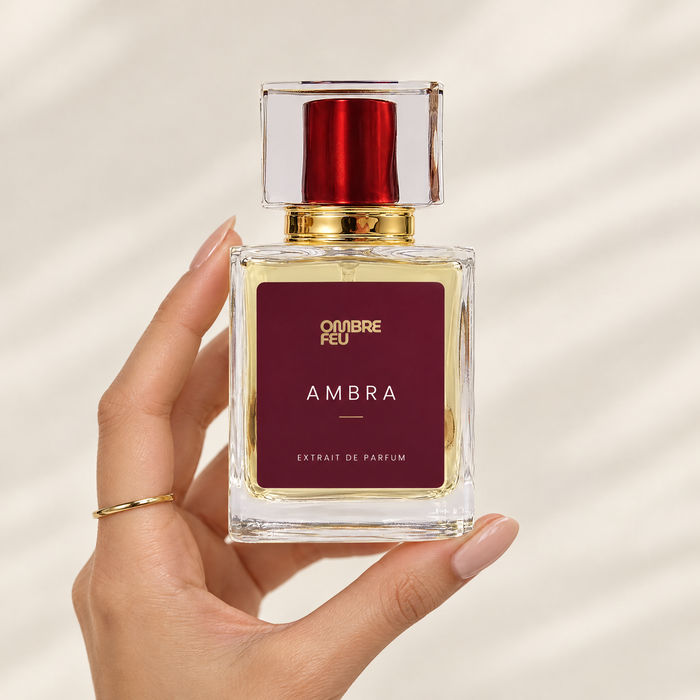
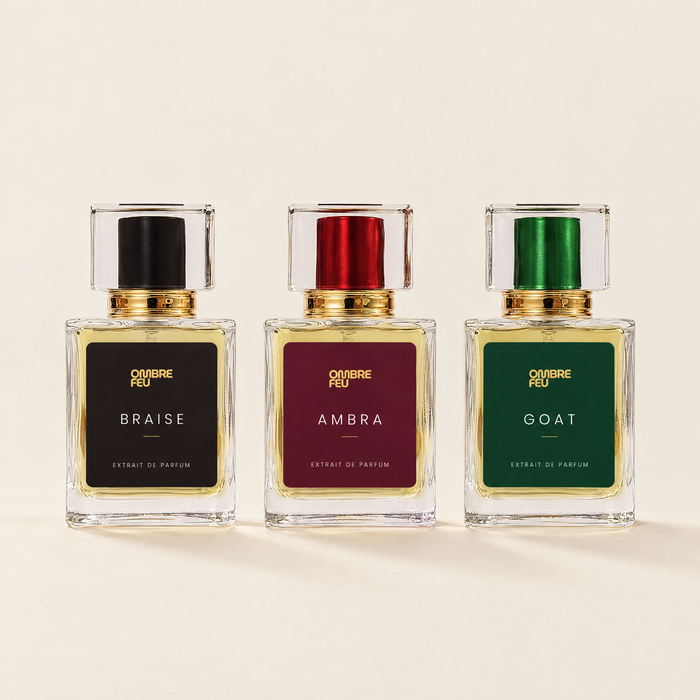
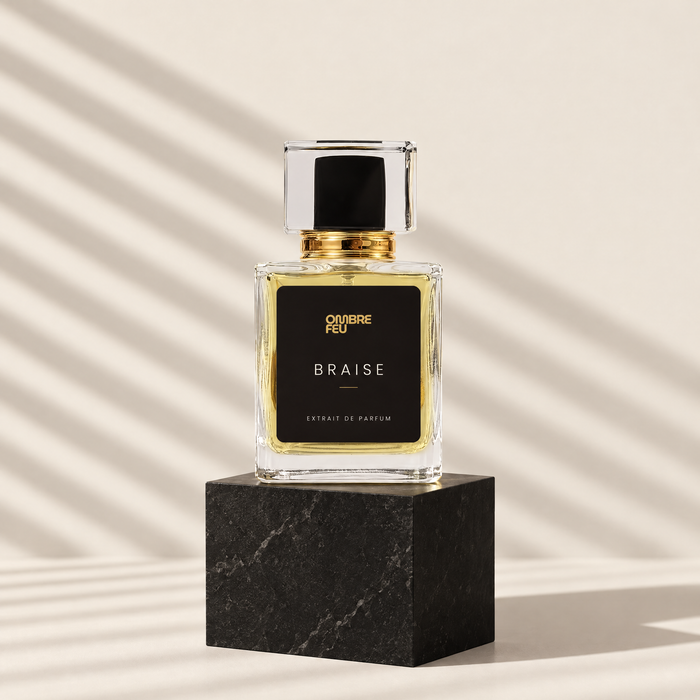
The INCI list for Braise is printed on the folding box and given in full on our Ingredients & product safety page, together with the warnings and the details of the responsible person. The same applies to GOAT and Ambra. All three are extraits de parfum with 30% fragrance oil, bottled in Germany and good for 36 months after opening.
Answers to general questions about shipping, shelf life and application can be found in our FAQ. If you have questions about an individual substance, write to us at info@ombrefeu.de.
Conclusion
The INCI list looks technical, but it is one of the most honest pieces of information a perfume comes with. Alcohol first, then the fragrance blend, then a few helpers and the individually named fragrance substances – that is all the structure it has. The names after “Parfum” are no cause for concern but a legal requirement, so that people with allergies can make an informed choice. Once you can place them, the back of a box tells you almost as much about a fragrance as its fragrance pyramid.
Frequently asked questions
What does INCI mean?
INCI stands for International Nomenclature of Cosmetic Ingredients, an internationally standardised naming system for cosmetic ingredients. The information is mandatory for every cosmetic product in the EU and lists the ingredients in descending order of quantity.
What does Parfum mean in the ingredients list?
Parfum is a collective term for the entire fragrance blend, meaning the concentrate with many individual substances. The exact formula does not have to be disclosed, but certain allergenic fragrance substances must also be named individually.
Why do Linalool and Limonene appear on almost every perfume?
Both occur in many natural oils, Linalool for example in lavender and bergamot, Limonene in citrus peel. Because they can trigger contact allergies in sensitive people, they must be declared individually above 0.001% in products that stay on the skin.
Why do new perfumes list more ingredients?
Regulation (EU) 2023/1545 expanded the list of fragrance substances to be declared individually to more than 80 entries. Products newly placed on the market since 31 July 2026 must comply with these rules. The longer list usually does not mean a different formula.
What should I do if I have a fragrance allergy?
Check the INCI list for the substance in question before buying, and test a new fragrance on a small patch of skin first. If redness, itching or stinging occurs, stop using it and, if in doubt, have it checked by a doctor.
- Eau de Cologne, Eau de Toilette, Eau de Parfum, Extrait de Parfum: the differences
- New: Lune Dorée – our captivating Extrait de Parfum for women
- Neu: Nuit Bédouine – unser fruchtig-holziger Extrait de Parfum für Herren
- Ombre & Feu Merch: Hoodies, T-Shirt, Gilet and Accessories at a Glance
- A Small Gift with Fragrance: Perfume Samples for Secret Santa and St Nicholas' Day
- Perfume for New Year's Eve: Which Scent Lasts All Night?
- Perfume for the Christmas Party: Subtle, Warm and Just Right
