


Eau de Cologne, Eau de Toilette, Eau de Parfum, Extrait de Parfum: the differences
Eau de Cologne, Eau de Toilette, Eau de Parfum and Extrait de Parfum differ in their share of fragrance oil. Percentages, longevity and effect of all four levels compared side by side.

Quick answer: Eau de Cologne, Eau de Toilette, Eau de Parfum and Extrait de Parfum differ mainly in their share of fragrance oil. Eau de Cologne contains around 2–5 %, Eau de Toilette 5–15 %, Eau de Parfum 15–20 % and Extrait de Parfum 20–40 %. The more fragrance oil, the longer and denser the scent lasts on your skin.
- Eau de Cologne: very light and fresh, usually lasts 1–2 hours
- Eau de Toilette: light and airy, usually lasts 3–5 hours
- Eau de Parfum: fuller and well balanced, usually lasts 6–8 hours
- Extrait de Parfum: the highest level, dense and close to the skin, often lasts 8 hours or more
- The percentages are industry guidelines. There are no legally defined limits.
The four fragrance concentrations at a glance
Every perfume consists of fragrance oil – the actual composition – and a carrier, usually alcohol. The name on the bottle gives you a rough idea of how much fragrance oil it contains. The table below shows the usual ranges.
| Name | Abbreviation | Fragrance oil | Typical longevity | Effect |
|---|---|---|---|---|
| Eau de Cologne | EdC | approx. 2–5 % | 1–2 hours | zesty, refreshing |
| Eau de Toilette | EdT | approx. 5–15 % | 3–5 hours | light, focus on the top notes |
| Eau de Parfum | EdP | approx. 15–20 % | 6–8 hours | full, present, versatile |
| Extrait de Parfum | – | approx. 20–40 % | 8 hours or more | dense, deep, close to the skin |
These longevity figures are rough guidelines on skin. They depend heavily on the composition, your skin type, the weather and how much you apply.
What is Eau de Cologne?
Eau de Cologne is the lightest level, with around 2–5 % fragrance oil. Classic colognes rely on citrus, herbs and neroli. They feel like a quick refresher and usually fade after one to two hours. The name comes from the city of Cologne, where this style of fragrance became famous in the 18th century.
What is Eau de Toilette?
Eau de Toilette contains around 5–15 % fragrance oil. It feels bright and airy, with the emphasis on the top notes during the first half hour. Many people wear Eau de Toilette in summer, at the gym or at the office and reapply over the course of the day. We compare the two middle levels in detail in Eau de Parfum or Eau de Toilette?.
What is Eau de Parfum?
Eau de Parfum contains around 15–20 % fragrance oil and is the most common concentration on the market. It is a great all-rounder: clearly noticeable, balanced between top, heart and base notes, and usually present on the skin for six to eight hours. If you simply buy "a good perfume", you are most likely holding an Eau de Parfum.
What is Extrait de Parfum?
Extrait de Parfum is the highest common concentration, with around 20–40 % fragrance oil. In shops this level is also called "Parfum", "Pure Parfum" or simply "Extrait". Because it contains less alcohol, the scent opens more softly, feels denser and lasts longer. Find out more in Extrait de Parfum: what the highest fragrance concentration really offers.
Which is better, Eau de Parfum or Extrait de Parfum?
Neither level is better as such – they suit different habits. An Extrait is worth it if you want to apply in the morning and still smell good in the evening. An Eau de Parfum suits you if you like to refresh your scent during the day or want a little more projection in the room.
| Eau de Parfum | Extrait de Parfum | |
|---|---|---|
| Fragrance oil | approx. 15–20 % | approx. 20–40 % |
| Sprays per day | usually 2–4 | usually 1–3 |
| Reapplying | occasionally | rarely |
| Projection | clearly noticeable in the room | denser, closer to the skin |
| Ideal for | everyday wear, flexible use | long days, evenings, autumn and winter |
Which fragrance concentration lasts the longest?
As a rule, Extrait de Parfum lasts the longest, followed by Eau de Parfum, Eau de Toilette and Eau de Cologne. But concentration is only one factor. Heavy base notes such as vanilla, leather, woods and amber last longer than citrus. Dry skin lets a scent fade faster than well-moisturised skin. You will find nine tips for better longevity in How long does perfume last?, and concrete guideline values for skin, clothing and hair in How long does Extrait de Parfum last?.
Does more fragrance oil automatically mean stronger?
No. More fragrance oil mainly means longer and deeper, not louder. In the first few minutes an Eau de Toilette can even project more strongly into the room, because the higher alcohol content spreads the top notes quickly. An Extrait feels calmer and stays closer to the skin. What the terms sillage and projection mean exactly is explained in Sillage, projection, longevity.
Does the same fragrance smell the same in every concentration?
Not necessarily. Many brands adjust the composition for each level. The Eau de Toilette version is often fresher, the Eau de Parfum or Extrait version warmer and rounder. If you love a fragrance in one concentration, test the other one before you buy.
What about Elixir, Intense and Parfum?
Terms such as "Elixir", "Intense" or "Absolu" are names chosen by the manufacturers, not fixed concentration levels. They usually stand for a stronger or warmer version of a well-known fragrance. A clear percentage of fragrance oil, where the manufacturer states one, tells you more.
How to identify the concentration on the bottle
- EdC or "Eau de Cologne": lightest level
- EdT or "Eau de Toilette": light
- EdP or "Eau de Parfum": medium to strong
- Extrait de Parfum, "Parfum" or "Pure Parfum": highest level
The ingredients are listed in the INCI list. How to read it is explained in Reading the ingredients on your perfume.
Which concentration suits you?
- Want a quick fresh boost after the gym? Eau de Cologne.
- Like light summer scents and don't mind reapplying? Eau de Toilette.
- Looking for an everyday all-rounder? Eau de Parfum.
- Want to apply once and smell good until the evening? Extrait de Parfum.
Why Ombre & Feu only makes Extrait de Parfum
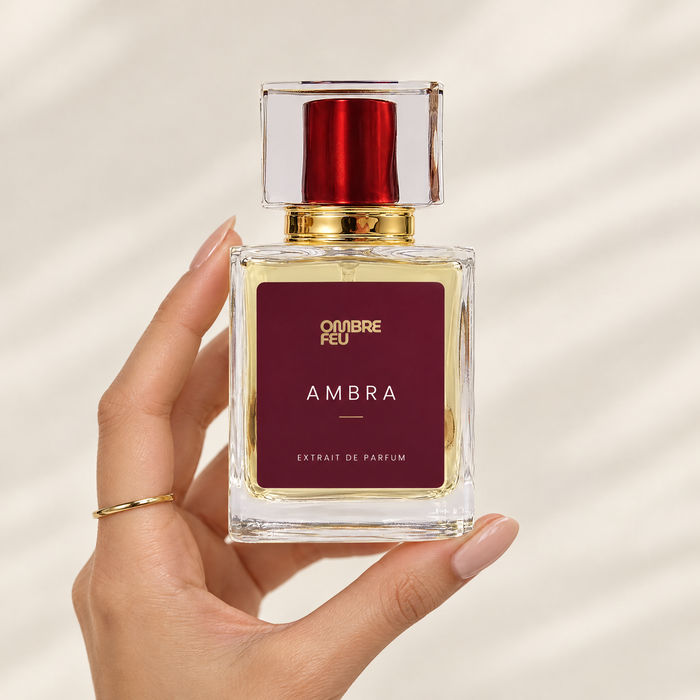
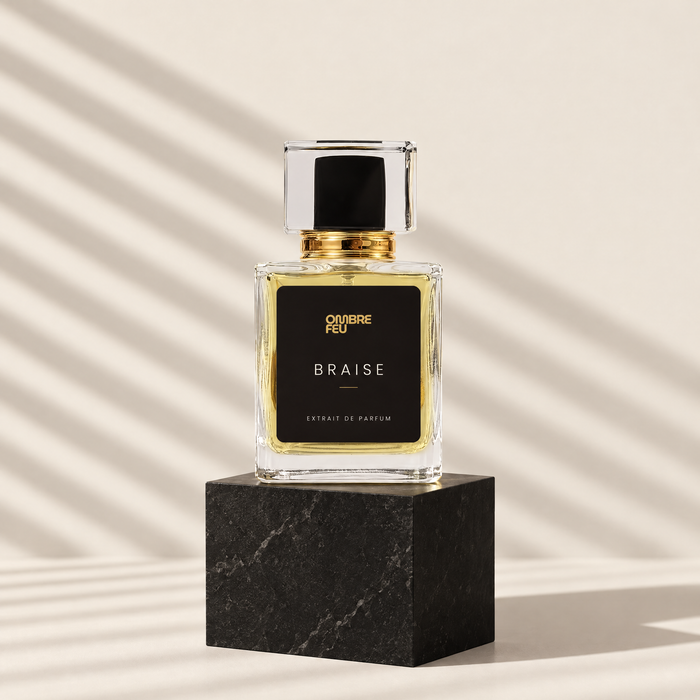
All Ombre & Feu fragrances are Extraits de Parfum with 30 % fragrance oil, 50 ml, made in Germany. We wanted fragrances you apply in the morning and can still notice on yourself in the evening. On the skin they last 9–14 hours.
- Braise – warm, spicy and leathery with cardamom, cinnamon, leather and vanilla, for him.
- Ambra – a creamy, sweet gourmand with pear, pistachio, praline and bourbon vanilla, for her.
Want to test the difference for yourself? The 2 ml sample set is available for every fragrance.
Conclusion
The difference between Eau de Cologne, Eau de Toilette, Eau de Parfum and Extrait de Parfum lies in the share of fragrance oil: from around 2 % to 40 %. The higher the share, the longer and denser the scent. Which level is right for you depends on how often you want to reapply and how close to the skin you want your scent to stay.
Frequently asked questions
What is the difference between Eau de Parfum and Eau de Toilette?
The share of fragrance oil. Eau de Parfum contains around 15–20 %, Eau de Toilette around 5–15 %. That is why Eau de Parfum usually lasts longer and feels fuller.
What is the difference between Eau de Parfum and Extrait de Parfum?
At around 20–40 %, Extrait de Parfum contains more fragrance oil than Eau de Parfum at around 15–20 %. An Extrait generally lasts longer and stays closer to the skin.
Which fragrance concentration lasts the longest?
As a rule, Extrait de Parfum. It is followed by Eau de Parfum, Eau de Toilette and Eau de Cologne. The notes, your skin type and how much you apply also play a big role.
Is Parfum the same as Extrait de Parfum?
Yes, in most cases. "Parfum", "Pure Parfum" and "Extrait de Parfum" usually refer to the highest concentration level.
What do EdP and EdT mean?
EdP stands for Eau de Parfum, EdT for Eau de Toilette and EdC for Eau de Cologne.
Are there legal limits for the concentrations?
No. The percentages are industry guidelines. So look for a specific percentage stated by the manufacturer – at Ombre & Feu it is 30 % fragrance oil.

- Eau de Cologne, Eau de Toilette, Eau de Parfum, Extrait de Parfum: the differences
- New: Lune Dorée – our captivating Extrait de Parfum for women
- Neu: Nuit Bédouine – unser fruchtig-holziger Extrait de Parfum für Herren
- Ombre & Feu Merch: Hoodies, T-Shirt, Gilet and Accessories at a Glance
- A Small Gift with Fragrance: Perfume Samples for Secret Santa and St Nicholas' Day
- Perfume for New Year's Eve: Which Scent Lasts All Night?
- Perfume for the Christmas Party: Subtle, Warm and Just Right
