


Vanilla, tonka bean, tobacco: the raw materials behind warm men's fragrances
Vanilla smells sweet and creamy, tonka bean of almond and hay, tobacco dry and sweet, sandalwood milky and woody. Where these raw materials of warm men's fragrances come from, and what is natural and what is synthetic.

Read the description of any warm men’s fragrance and you’ll almost always come across the same names: vanilla, tonka bean, tobacco, sandalwood, amber. That is neither chance nor a lack of imagination. For more than a hundred years, these five raw materials have formed the foundation of perfumery. Here is what lies behind each one, how they work together and how to recognise them on your own skin.
In short: The five classic base notes of warm fragrances have very different origins. Vanilla is the fruit of an orchid, tonka a tree seed, tobacco a dried leaf, sandalwood a heartwood – and amber is not a single raw material at all, but an accord. What they share is that they evaporate slowly and give a fragrance warmth, depth and staying power.
- Vanilla: creamy and sweet, in perfume mostly as vanillin
- Tonka bean: sweet, hay-like, almondy – the source of coumarin
- Tobacco: dry-sweet, honeyed, slightly smoky
- Sandalwood: creamy-woody, soft
- Amber: a warm accord of resins and vanillin, not fossil resin
Why these five in particular?
All five consist of large, heavy molecules. They evaporate slowly and therefore carry a fragrance for hours. In the fragrance pyramid, they sit in the base. What’s more, they harmonise with one another. Vanilla rounds off tobacco, tonka links sweetness with wood, sandalwood gives everything a creamy texture. That is why they so often appear together.
The five raw materials at a glance
| Raw material | What it is | Scent character | Role in the fragrance |
|---|---|---|---|
| Vanilla | Fermented fruit of an orchid | creamy, sweet, balsamic | Warmth and roundness |
| Tonka bean | Seed of a tropical tree | hay-like, almondy, caramel-like | Bridge between sweetness and wood |
| Tobacco | Dried, fermented leaves | honeyed, dry, slightly smoky | Dark, grown-up depth |
| Sandalwood | Heartwood of a slow-growing tree | milky, creamy, softly woody | Body and texture |
| Amber | Accord of resins and vanillin | warm, resinous, slightly sweet | Glow and staying power |
Vanilla
The vanilla pod is the fruit of an orchid, Vanilla planifolia, originally from Mexico and today mainly from Madagascar. Freshly harvested, it barely smells at all. Its aroma only develops through weeks of fermenting and drying.
The most important scent component of vanilla is vanillin. Since the 19th century it has also been obtainable outside the pod, and it is precisely this development that shaped modern perfumery. The vast majority of vanilla notes in perfumes today are based on vanillin, often complemented by small amounts of natural extracts. That is not a lack of quality: vanillin is stable, consistent and, in pure form, cleaner than the variable natural pod.
In a fragrance, vanilla comes across as warm, creamy and inviting. In men’s fragrances it is rarely used on its own, but contrasted with dry or spicy notes so that it doesn’t become too sweet. The different vanilla styles and how vanilla turns masculine are shown on our page Men’s fragrance with vanilla.
Tonka bean
The tonka bean is the seed of the South American tree Dipteryx odorata. It is black and wrinkled and smells intense: of hay, almond, caramel and a little of tobacco.
The reason is coumarin (in the INCI list: Coumarin). Few substances have shaped men’s perfumery as much. When it was first used in a fragrance towards the end of the 19th century, the result was the fougère – to this day one of the basic structures of classic men’s fragrances. Coumarin is one of the substances that must be named on the packaging above a certain concentration. What that means is explained in our article Reading the ingredients on a perfume.
Tonka is the bridge between sweetness and wood. It makes a fragrance soft without making it cloying.
Tobacco
In perfume, tobacco doesn’t smell of cigarettes or stale smoke. What is meant is the scent of dried, fermented tobacco leaves: sweetish, honeyed, hay-like, with a slightly leathery, dark depth.
This note is created in one of two ways. Either with an extract of tobacco leaves or, more often, as an accord of substances that recreate the impression – such as honeyed, hay-like and coumarin-rich components. The result is what many people love about tobacco notes: a grown-up warmth that stays dry at the same time.
Sandalwood
Genuine East Indian sandalwood, Santalum album, is among the most sought-after raw materials of all. Because stocks were overexploited for decades, it is strictly regulated and correspondingly expensive. Natural sandalwood oil therefore often comes from plantations today, or from the Australian species Santalum spicatum.
There are also synthetic sandalwood molecules that capture the creamy, milky-woody character very well while sparing the scarce resource. In many modern fragrances, the two work together.
Sandalwood smells soft, round and slightly sweet. It gives a fragrance body without becoming loud.
Amber
Amber is the most frequently misunderstood term. In perfumery it has nothing to do with the fossil resin of the same name. Instead, amber is an accord: a combination of several raw materials that together create a warm, resinous, slightly sweet impression. Classically it consists of labdanum (a resin from the rockrose), benzoin and vanillin.
Amber is what makes a fragrance “glow”. It extends longevity and provides a noticeable but unobtrusive sillage. What sillage means exactly is explained in the glossary of perfume terms.
The sixth member: leather
Leather appears in warm men’s fragrances almost as often as the five classics. Like amber, it is usually an accord rather than an extract of real leather. Birch-tar-like, smoky and slightly animalic components create the impression of tanned leather, an old armchair or a well-worn jacket. Leather gives the sweetness of vanilla and tonka a counterweight: it makes a fragrance drier, darker and edgier.
How the raw materials work together
On their own, base notes are often unspectacular. They reveal their effect in pairs and trios. A few combinations you’ll find in many warm fragrances:
- Vanilla and tobacco. Vanilla takes the bitterness out of tobacco, tobacco takes the childlike quality out of vanilla. Together they create a warm, almost honeyed note that feels grown-up.
- Tonka and sandalwood. The hay-like facet of tonka lies over the creaminess of the wood. The result is soft, smooth and close to the skin.
- Amber and vanilla. The classic warmth of many oriental fragrances. Resinous, sweet and long-lasting.
- Leather and tobacco. The dark side. Dry, slightly smoky, with a hint of a cosy study and a library.
To keep a base like this from feeling heavy, it needs light from above: citrus and bright spices in the opening, warm spices in the heart. How cinnamon, cardamom and pink pepper do this is explained in our article on spices in men’s fragrance.
How to recognise the notes on your skin
The names in a fragrance pyramid are easier to read than to smell. With a little patience, you can still learn to tell them apart:
- Wait for the base. The five raw materials only become clearly noticeable after one to three hours. What you smell in the first few minutes is the opening.
- Smell up close. Base notes stay close to the skin. Hold your wrist right up to your nose instead of sniffing the air.
- Ask about texture, not the name. Creamy and milky points to sandalwood, hay-like and almondy to tonka, resinous and glowing to amber, dry-sweet to tobacco.
- Compare with the kitchen. A vanilla pod, a piece of almond pastry, dried hay – everyday smells like these sharpen your nose for the perfume version.
- Smell again in the evening. After many hours, almost only the base remains. That is the best moment to perceive it in isolation.
Three common misconceptions
“Vanilla is feminine”
Vanilla is neither masculine nor feminine. What matters is its surroundings. Next to flowers and fruit it feels soft and playful; next to leather, tobacco and wood it feels dry and serious. Many classic men’s fragrances have a distinct vanilla in the base.
“Tobacco smells of smoke”
A tobacco note in perfume smells of dried leaves, not ash. Even if you don’t like cigarette smoke, you can still appreciate tobacco fragrances.
“Sweet is cheap”
Sweetness is a tool, not a verdict on quality. A well-built warm base is balanced: spices, woods and leather keep the sweetness in shape. It only becomes cloying when this counterweight is missing.
Natural or synthetic – which is better?
The honest answer: that is the wrong question. Almost every perfume is a blend of both. Synthetic materials make a fragrance more stable and more consistent from batch to batch, and they spare scarce natural resources. Natural materials bring depth and nuance, but vary with each harvest. Whether a fragrance is good depends on the composition, not on the origin of its individual components.
When warm base notes work best
Warm raw materials unfold most beautifully in cool air. In summer, the same base can feel heavy; in autumn and winter it wraps around you like a coat. Time of day matters too: in the evening, in calm surroundings and up close, the depth of vanilla, tobacco and amber comes into its own. One or two sprays are enough – these notes carry far and last long. You’ll find ideas for the cold season on our page Winter fragrance for men, and inspiration for special occasions in the article Fragrance for dates and evenings.
All five in one fragrance
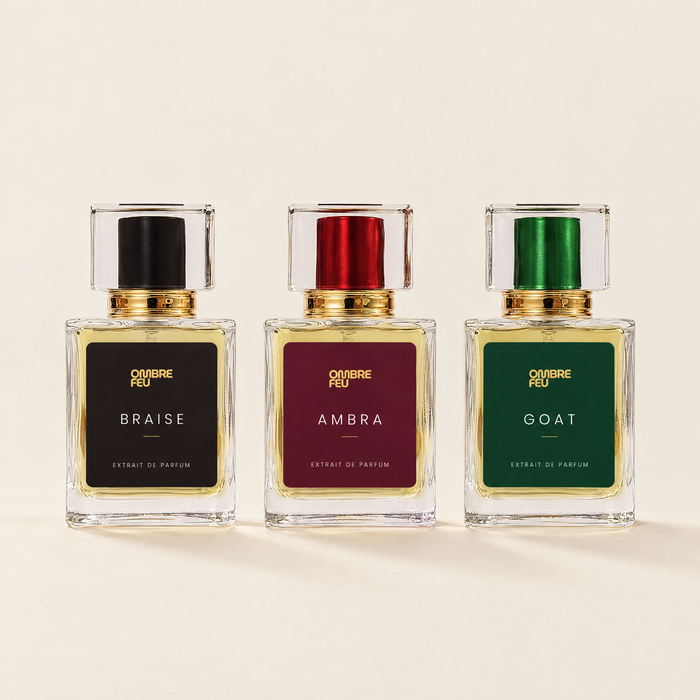
The base of Braise brings together exactly these five notes – vanilla, tonka bean, tobacco, sandalwood and amber – and adds leather. To keep it from tipping into pure sweetness, cinnamon, saffron, iris and clary sage sit above it in the heart, with grapefruit, cardamom, pink pepper and bergamot in the opening. As an Extrait de Parfum with 30% fragrance oil, Braise lasts 9–14 hours on the skin. On the INCI list you’ll find some of the substances from this article, such as Vanillin and Coumarin.
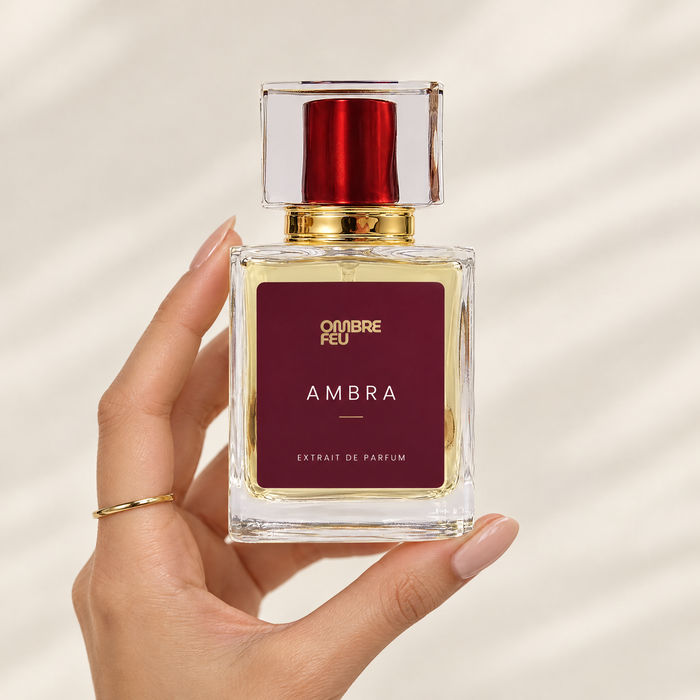
Our perfume for women, Ambra, also rests on vanilla – there as bourbon vanilla, together with pear, pistachio and praliné. Because both fragrances share this warm vanilla, they make a harmonious fragrance pair; read more in the article Perfume for couples. If you want to explore the warm-spicy direction as a whole, you’ll find an overview under spicy men’s fragrance.
Why fragrances like these work so well in the cold season is explained in our article Men’s fragrance for autumn and winter.
Conclusion
Vanilla, tonka bean, tobacco, sandalwood and amber are not a passing trend but the foundation of warm men’s fragrances. Each raw material brings its own quality: vanilla the warmth, tonka the softness, tobacco the depth, sandalwood the body, amber the glow. Once you can tell them apart, you’ll read fragrance descriptions with different eyes – and find the long-lasting perfume that stays with you long after the first impression has faded.
Frequently asked questions
Is the vanilla in perfume real?
The vanilla note in perfume usually consists mainly of vanillin, the most important scent component of the vanilla pod, often complemented by natural extracts. Vanillin is more stable and consistent than the natural pod and not a flaw in quality.
What does tonka bean smell like?
Tonka bean smells sweet, warm and hay-like, with hints of almond, caramel and tobacco. This is mainly due to coumarin, which has played a central role in men's perfumery for more than a hundred years.
Does a perfume with a tobacco note smell of cigarettes?
No. The tobacco note in perfume is modelled on dried, fermented tobacco leaves and smells sweetish, honeyed and hay-like with a slightly leathery depth – not of smoke or an ashtray.
What is amber in perfume?
In perfumery, amber is not a single raw material and has nothing to do with the fossil resin. It is an accord of several substances, classically labdanum, benzoin and vanillin, that smells warm, resinous and slightly sweet.
Are synthetic fragrance substances worse than natural ones?
Not inherently. Synthetic substances are more stable and consistent, and spare scarce resources such as sandalwood. Natural substances bring nuance, but vary with each harvest. The quality of a fragrance depends on the composition.

- Eau de Cologne, Eau de Toilette, Eau de Parfum, Extrait de Parfum: the differences
- New: Lune Dorée – our captivating Extrait de Parfum for women
- Ombre & Feu Merch: Hoodies, T-Shirt, Gilet and Accessories at a Glance
- A Small Gift with Fragrance: Perfume Samples for Secret Santa and St Nicholas' Day
- Perfume for New Year's Eve: Which Scent Lasts All Night?
- Perfume for the Christmas Party: Subtle, Warm and Just Right
- Christmas Gift for Her: How to Find the Right Perfume
