


Cinnamon, cardamom, pink pepper: spices in men's fragrance explained
Cardamom smells cool and bright, pink pepper sparkling, cinnamon warm and deep. How each spice works in a men's fragrance, what sets fresh spices apart from warm ones and how Braise uses them.
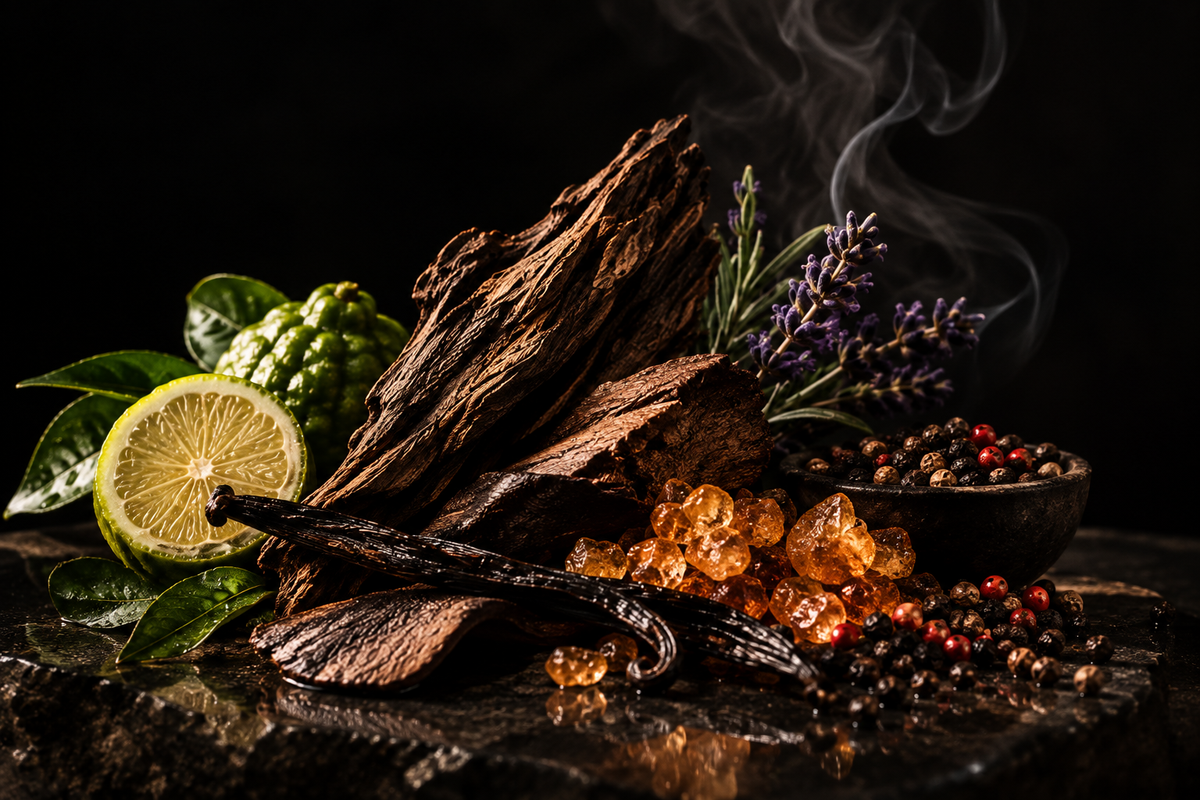
When people hear “spicy perfume”, they often think of Christmas markets and mulled wine. Yet the world of spices in perfumery is far broader. Some spices feel cool and bright, almost like a breath of fresh air. Others are warm, deep and slightly sweet. Understanding how they smell and where they sit in a fragrance helps you judge a spicy men’s fragrance before you spray it on.
In short: Perfumery roughly distinguishes between fresh and warm spices. Fresh spices such as cardamom and pink pepper usually sit in the top note and create a lively opening. Warm spices such as cinnamon and clove carry the heart and blend with woods, vanilla and resins in the base.
- Cardamom: cool, aromatic, slightly citrusy, with a hint of eucalyptus
- Pink pepper: bright, fruity-resinous, sparkling – less sharp than black pepper
- Cinnamon: warm, sweetish, woody, with depth
- Spices mainly shape the oriental, woody and aromatic fragrance families
Why spices work so well in perfume
Spices bring something many other raw materials lack: contour. A fragrance built on vanilla and woods can quickly feel soft and round. A spice gives it structure and tension. Fresh spices open a fragrance up and bring it to life; warm spices give it warmth and character without making it feel heavy.
On top of that, most people know spices from the kitchen. That creates an immediate, familiar association. At the same time, a spice in perfume rarely smells exactly like the jar in your kitchen cupboard. Perfumers use essential oils, extracts or individual aroma molecules and combine them so that particular facets come to the fore.
Cardamom: cool, bright, aromatic
Cardamom comes from the seed pods of a plant in the ginger family. Perfumery mostly uses the essential oil of the seeds. Its scent is surprisingly fresh: aromatic, slightly citrusy, with a cool, almost camphor-like facet reminiscent of eucalyptus. Behind it lies a soft, slightly sweet warmth.
It is exactly this dual nature that makes cardamom so versatile. It can open a fragrance brightly while building a bridge to warmer notes. That is why you often find it in the top note of fragrances that later turn warm and woody.
Pink pepper: sparkling and fruity
Botanically speaking, pink pepper is not pepper at all. The pink berries come from the pepper tree, a plant that is not related to black pepper. You can clearly smell the difference: pink pepper is less sharp and piercing, but brighter, fruitier and slightly resinous. Perfumers often describe it as “sparkling” – it brings light and movement to the opening.
Pink pepper is a typical top note. It fades comparatively quickly but strongly shapes the first impression of a fragrance. In men’s fragrances, it keeps a warm, deep scent from starting out heavy. In perfumes for women, it often accompanies rose and fruity notes – a spice, in other words, that knows no fixed category.
Cinnamon: warm, sweet, deep
Cinnamon is obtained from the dried bark of cinnamon trees. In perfume it smells warm, sweetish and slightly woody, with a spicy sharpness that stays in the background. It is the spice most people instantly associate with warmth and comfort.
Cinnamon usually sits in the heart of a fragrance. It unfolds once the top notes have faded and blends well with vanilla, tonka bean, tobacco and woods. Dosed correctly, it gives a fragrance depth and warmth. Too much of it can quickly recall pastries – a question of balance.
A note on skin tolerance: certain components of the cinnamon aroma are among the fragrance substances that must be declared on the packaging in the EU above a certain concentration. How to read these declarations is explained in Reading perfume ingredients and allergens. You’ll find our own information under Ingredients and product safety.
Other spices you’ll meet in men’s fragrances
Cardamom, pink pepper and cinnamon are only a selection. If you like spicy fragrances, you’ll keep coming across a few more names in the fragrance pyramid:
Black pepper
Drier and sharper than its pink namesake, with a slightly woody, almost smoky edge. It gives fresh fragrances bite and keeps citrus notes from seeming too sweet or too harmless.
Ginger
Zesty, citrusy, with a lively sharpness. Ginger is a typical spice for bright, fresh compositions and pairs well with grapefruit and bergamot.
Saffron
Strictly speaking the stigma of a flower, but counted among the spices in perfumery. Saffron smells leathery, slightly metallic and warm, with a honey-like depth. It blends well with leather, rose and woods.
Clove and nutmeg
Clove is warm, intense and slightly medicinal; nutmeg is softer, creamier and nutty. Both are usually used sparingly because they can quickly dominate a composition.
The spices compared
| Spice | Character | Typical position | Blends well with |
|---|---|---|---|
| Cardamom | cool, aromatic, slightly citrusy | Top note | Bergamot, iris, woods |
| Pink pepper | bright, fruity-resinous, sparkling | Top note | Citrus notes, rose, woods |
| Ginger | zesty, citrusy, sharp | Top note | Grapefruit, bergamot, cedar |
| Black pepper | dry, sharp, woody | Top or heart note | Lavender, vetiver, cedar |
| Cinnamon | warm, sweetish, woody | Heart note | Vanilla, tonka bean, tobacco, amber |
| Saffron | leathery, warm, slightly metallic | Heart note | Leather, rose, iris, woods |
How top, heart and base notes work together and why a fragrance changes over the hours is explained in Top note, heart note, base note.
Spicy fragrance families
Spices appear in many fragrance families, but they mainly shape three directions:
Oriental
Oriental fragrances – today often called amber fragrances – combine warm spices with resins, vanilla, tonka bean and amber. They are warm, round and tend to stay close to the skin. Spices give them tension and keep them from becoming too sweet.
Woody-spicy
Here, spices meet woods such as sandalwood, cedar or vetiver. The result is drier and more structured than oriental fragrances, often with a hint of smoke or leather.
Aromatic
In aromatic fragrances, perfumers combine fresh spices with herbs such as lavender, sage or rosemary. This direction feels brighter and more classic.
Why warm, spicy fragrances suit the cold season so well is covered in Men’s fragrance for autumn and winter. You can read more about the warm raw materials that spices blend with in the base in Vanilla, tonka bean, tobacco.
Fresh-spicy or warm-spicy: which direction suits you?
The most important decision with a spicy men’s fragrance is not the individual spice but the temperature. Fresh-spicy fragrances live on ginger, pepper and citrus; they feel awake and clear and suit the daytime. Warm-spicy fragrances build on cinnamon, saffron and a sweet-woody base; they are calmer, denser and unfold most beautifully in the evening.
| Fresh-spicy | Warm-spicy | |
|---|---|---|
| Typical spices | Ginger, black pepper, cardamom | Cinnamon, saffron, clove |
| Companions | Citrus, lavender, cedar, vetiver | Leather, vanilla, tonka bean, tobacco, amber |
| Effect | bright, clear, energetic | deep, velvety, intimate |
| Best time | Daytime, office, spring and summer | Evening, autumn and winter |
Many men quickly notice which side they lean towards when testing. Others wear both – a bright fragrance for the working day, a warm one for the evening. You’ll find an overview of spicy men’s fragrances and how to wear them on our page Spicy men’s fragrance.
How to pick out the spices in a perfume
Recognising spices in a finished fragrance takes practice – and it’s fun. Here’s how:
- Smell the first minutes consciously. Cardamom, pink pepper and ginger show themselves mainly in the opening. Smell right after the fragrance has dried down, not an hour later.
- Compare with the kitchen. Open a cardamom pod or grate a cinnamon stick, then smell your wrist again. The family resemblance often suddenly becomes obvious.
- Come back after an hour. Now the heart has settled. Cinnamon and saffron emerge as soon as the bright notes have faded.
- One last time in the evening. In the base, the spices are usually just a shimmer, embedded in wood, resin and vanilla.
How to recognise a well-made spicy fragrance
- The spice is part of the whole. A good spicy fragrance doesn’t smell like a single spice but like a composition in which the spice plays a role.
- The transition is seamless. Fresh spices in the opening should flow gently into the warmer notes, without a break.
- The sweetness stays under control. Cinnamon and vanilla can quickly tip into gourmand territory. A balanced fragrance keeps its structure.
- It evolves. After an hour it smells different from after five minutes – and different again after six hours.
Common mistakes when wearing spicy fragrances
- Too much at once. In large amounts, warm spices quickly feel heavy. With a concentrated fragrance, one or two sprays are enough.
- Spicy care products underneath. A shower gel with its own cinnamon or pepper note shifts the balance. Neutral care products leave the perfume its space.
- Judging only on a paper strip. Spices react strongly to the warmth of the skin. What seems edgy on paper often becomes rounder on skin.
How Braise uses spices
Braise is a warm-spicy, oriental-woody fragrance, and the spices tell the story of its development. The opening pairs cardamom and pink pepper with bergamot and grapefruit: bright, cool, sparkling. It opens the fragrance without being loud. In the heart, cinnamon takes over, accompanied by saffron, iris and clary sage. The iris makes the cinnamon powdery and soft, the sage gives it an aromatic, slightly herbal edge, the saffron a leathery shimmer. This keeps the warmth elegant rather than sweet.
In the base, leather, vanilla, tonka bean, tobacco, sandalwood and amber carry the warmth of the spices onwards. As an Extrait de Parfum with 30% fragrance oil, Braise lasts 9–14 hours on the skin and unfolds most beautifully on autumn and winter evenings. You’ll find the complete fragrance pyramid on The fragrance.
More brightly spiced is GOAT: pink pepper in the opening, together with bergamot and blood orange, before fig, honey and a hint of black tea take over – a men’s fragrance for day and evening. Ambra, on the other hand, does without spices: pear, pistachio and praline make it creamy and sweet. You’ll find all three fragrances in the collection.
Conclusion
In perfumery, spices are not decoration but architecture. Cardamom and pink pepper open a fragrance with light, cinnamon and saffron give it warmth and weight in the heart, and in the base they linger quietly. Once you understand where each spice sits, you read a fragrance pyramid differently – and you’ll find the spicy men’s fragrance that suits you more quickly: fresh and clear for the day, or warm and deep for the evening.
Frequently asked questions
How does cardamom smell in perfume?
In perfume, cardamom smells fresh and aromatic, slightly citrusy and with a cool facet reminiscent of eucalyptus. Behind it lies a gentle warmth. It usually sits in the top note and opens a fragrance brightly.
Is pink pepper real pepper?
No. Pink pepper comes from the South American pepper tree and is not botanically related to black pepper. In a fragrance, it is less sharp, but brighter, fruitier and slightly resinous.
How does cinnamon smell in a men's fragrance?
Cinnamon smells warm, sweetish and slightly woody, with a subtle spicy sharpness. It usually sits in the heart note and combines well with vanilla, tonka bean, tobacco and woods.
What is the difference between fresh and warm spices?
Fresh spices such as cardamom, pink pepper or ginger feel bright and lively and usually appear in the top note. Warm spices such as cinnamon, clove or nutmeg feel deep and round and tend to shape the heart and base notes.
Do spicy perfumes suit summer too?
Fresh-spicy fragrances with cardamom or pink pepper also work well in warm weather. Warm-spicy fragrances with cinnamon and vanilla unfold best in the cooler season and in the evening. In summer, one spray is then often enough.
Which fragrance families are spicy?
Spices shape above all oriental fragrances, woody-spicy fragrances and aromatic fragrances. In oriental fragrances, they combine with vanilla and resins; in woody ones, with sandalwood or cedar; in aromatic ones, with herbs such as lavender or sage.


- Eau de Cologne, Eau de Toilette, Eau de Parfum, Extrait de Parfum: the differences
- New: Lune Dorée – our captivating Extrait de Parfum for women
- Ombre & Feu Merch: Hoodies, T-Shirt, Gilet and Accessories at a Glance
- A Small Gift with Fragrance: Perfume Samples for Secret Santa and St Nicholas' Day
- Perfume for New Year's Eve: Which Scent Lasts All Night?
- Perfume for the Christmas Party: Subtle, Warm and Just Right
- Christmas Gift for Her: How to Find the Right Perfume
