


Extrait de Parfum: what the highest fragrance concentration really delivers
Extrait de Parfum is the highest common fragrance concentration, usually with 20–40 % fragrance oil, and lasts longer and richer than Eau de Parfum. What more fragrance oil means for longevity, sillage and consumption, and who an Extrait is worth it for.

Bottles say eau de toilette, eau de parfum, parfum – and sometimes extrait de parfum. The terms sound like marketing, but they describe something concrete: how much fragrance oil is in the bottle. An extrait contains the most. What that means in practice, how much you need and who the highest concentration is worth it for – we explain it here.
Extrait de parfum is the highest common fragrance concentration. More fragrance oil generally means longer longevity, a denser, closer scent cloud and lower consumption per application. How long a fragrance lasts, however, also depends on the raw materials, your skin and the dosage.
- Extrait de parfum usually contains 20–40% fragrance oil – at Ombre & Feu it’s 30%
- More fragrance oil doesn’t automatically mean louder, but above all longer and denser
- One to three sprays are usually enough
- Heavy base notes such as vanilla, amber and woods benefit in particular
- Once opened, a bottle keeps for a long time if stored well – ours for 36 months
What does extrait de parfum mean?
At its core, a perfume consists of two components: the fragrance oil, i.e. the actual composition, and a carrier, usually alcohol. The name on the bottle gives a rough indication of how high the proportion of fragrance oil is. There are no binding legal limits for this, but the industry follows customary ranges.
| Name | Usual fragrance oil concentration | Typical effect |
|---|---|---|
| Eau de Cologne | approx. 2–5% | light, short, refreshing |
| Eau de Toilette | approx. 5–15% | fresh, suitable for everyday wear, medium longevity |
| Eau de Parfum | approx. 15–20% | fuller, longer-lasting |
| Extrait de Parfum | approx. 20–40% | dense, close to the skin, very long-lasting |
We have explained the differences between eau de parfum and eau de toilette in detail in Eau de parfum or eau de toilette?. The extrait is the next level up.
Extrait, parfum, pure parfum: the same level?
In shops you will come across several names for the highest concentration: “Extrait de Parfum”, “Parfum”, “Pure Parfum” or simply “Extrait”. As a rule, they mean the same category. Because the terms are not legally protected, it is still worth checking whether the brand states the concentration specifically. A clear percentage – 30% fragrance oil in our case – says more than any name.
How an extrait is made
The basis is the same for all concentrations: a composition is built from many individual fragrance materials – the so-called fragrance oil or concentrate. For an extrait, this concentrate is diluted with considerably less alcohol than for an eau de toilette. The blend then usually rests for a while so that the components can bind together – this is called maturing or maceration. It is then chilled, filtered and bottled. What this process looks like in detail is explained in How is a perfume made?.
Important: a higher concentration isn’t simply “more of the same”. A composition is often adjusted for the extrait, because the balance between fresh and heavy notes shifts when less alcohol is involved.
What does more fragrance oil really deliver?
Longer longevity
The more fragrance materials there are on the skin, the longer a scent remains perceptible. The base notes in particular – woods, resins, vanilla, amber, musk – evaporate slowly and carry the fragrance over many hours. Our extraits last 12–18 hours on the skin, depending on skin type and dosage. Which other factors play a role is explained in How long does perfume last?.
More depth, less volume
A common misconception: that an extrait is simply “stronger”. In fact, an extrait often sits closer to the skin than an eau de toilette. Because it contains less alcohol, the first spray is less explosive. The fragrance feels denser and rounder; it doesn’t fill the room but stays close to you. What terms like sillage and projection mean exactly is explained in Sillage, projection, longevity.
More economical in use
Because each spray contains more fragrance, you need less. With one to three sprays a day, a 50 ml bottle lasts considerably longer than the same amount of eau de toilette, which people tend to apply generously.
Extrait and eau de parfum in everyday life
How do the concentrations differ when you actually wear them? A rough guide:
| Eau de Toilette | Eau de Parfum | Extrait de Parfum | |
|---|---|---|---|
| Sprays for the day | usually 3–5 | usually 2–4 | usually 1–3 |
| Reapplying | often necessary | occasionally | rarely |
| Projection at the start | bright, airy | noticeable | dense, rather close to the skin |
| Strengths | heat, sport, spontaneous freshness | all-rounder | long days, evenings, the cold season |
So which level is right depends less on “better or worse” than on how you wear your fragrance. If you want to spray once in the morning and then forget about it, an extrait usually serves you best.
How much extrait should you apply?
Less really is more here. For everyday wear, one to two sprays are enough; for the evening, two to three. Spray onto warm areas of skin – throat, back of the neck, wrists – and don’t rub the fragrance in. At the office, a single spray is often enough. The most common application mistakes can be found in How to apply perfume: 7 mistakes.
- Prepare your skin: after showering, on dry skin, ideally moisturised with an unscented lotion.
- Keep your distance: about 10 to 15 centimetres between bottle and skin, so the fragrance spreads finely.
- Choose your spots: one spray on the throat or back of the neck, and if needed a second on the chest or a wrist.
- Give it time: don’t judge the fragrance straight away. After 20 to 30 minutes you’ll know how it really smells on your skin.
Common misconceptions about extraits
- “An extrait is only for the evening.” It depends on the composition, not the concentration. A fresh, woody extrait works at the office too – applied sparingly.
- “More sprays mean more longevity.” Above all, they mean more intensity. Longevity depends more on base notes and skin.
- “Extraits are too heavy for summer.” With one spray fewer and a fresh composition, they are actually pleasant in warm weather, because you don’t have to keep reapplying.
- “More fragrance oil is bad for the skin.” What matters is which substances are used and in what quantities. There are rules for this, such as the IFRA standards and the EU Cosmetics Regulation – regardless of the name on the bottle.
Who is an extrait worth it for?
- For anyone who wants to wear a fragrance all day without reapplying.
- For warm, woody and spicy fragrances. Vanilla, tonka, amber and woods unfold their full depth at high concentration.
- For dry skin. Fragrances fade faster on it – more fragrance oil makes up for that.
- For the cold season. In the cold, a fragrance evaporates more slowly and stays more reserved; an extrait gives it more presence.
An extrait is less suitable for anyone who likes to apply their fragrance generously and several times a day, or who is mainly looking for a quick burst of freshness after sport. That is what a light eau de toilette or eau de cologne is made for. And if you react very sensitively to fragrance, you are often better off with a lower concentration or a single spray close to the skin.
Is an extrait worth it in terms of price?
At first glance, an extrait often seems more expensive than an eau de toilette in the same bottle size. The fairer comparison, however, is not the price per bottle but the price per day on which you smell good. Three considerations help put it into perspective:
- Fewer sprays: if you need only one to three sprays instead of four or five, the same volume lasts considerably longer.
- No reapplying: a fragrance that lasts from the morning into the evening saves the second and third round of the day.
- Fewer bad buys: once you consciously opt for a high-quality fragrance, you less often buy “yet another” light fragrance that ends up sitting on the shelf.
Our extraits start at €49.90 for 50 ml. With our 3 for 2 – mix & match offer, the third bottle is free – for example one fragrance for the day, one for the evening and one to give as a gift. Shipping is free within Germany.
Ingredients and skin compatibility
The same applies to an extrait: which substances it contains is stated in the INCI list on the packaging. Under the EU Cosmetics Regulation, certain fragrance materials that can trigger allergies must be listed individually above a certain amount. If you react sensitively, read this list and try a new fragrance on a small patch of skin first. How to read the information correctly is explained in Reading perfume ingredients. How we handle ingredients is described on Ingredients & product safety.
Storage and shelf life after opening
An extrait ages too when it is exposed to light, heat and air. So keep the bottle cool, dry and out of direct sunlight – not in the bathroom and not on the windowsill. Once opened for the first time, our bottles keep for 36 months. More on this in Can perfume expire?.
Our extraits
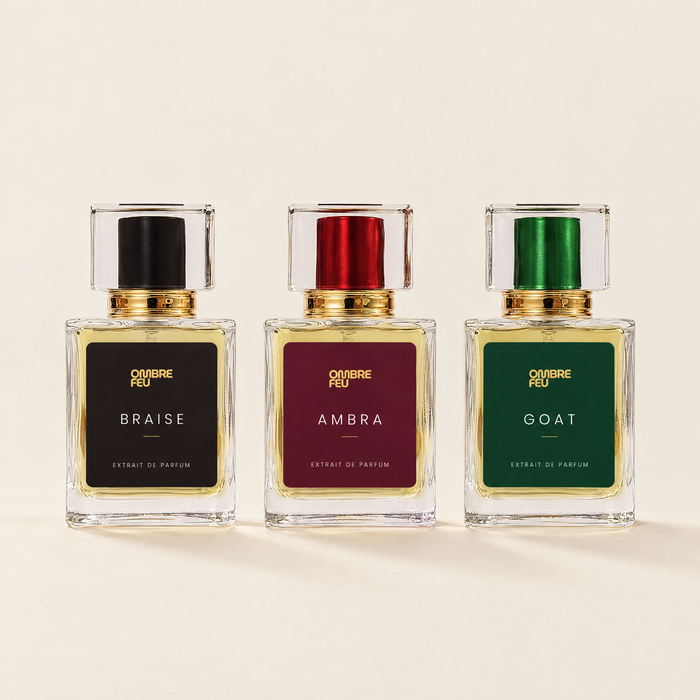
All Ombre & Feu fragrances are extraits de parfum with 30% fragrance oil, 50 ml, bottled in Germany:
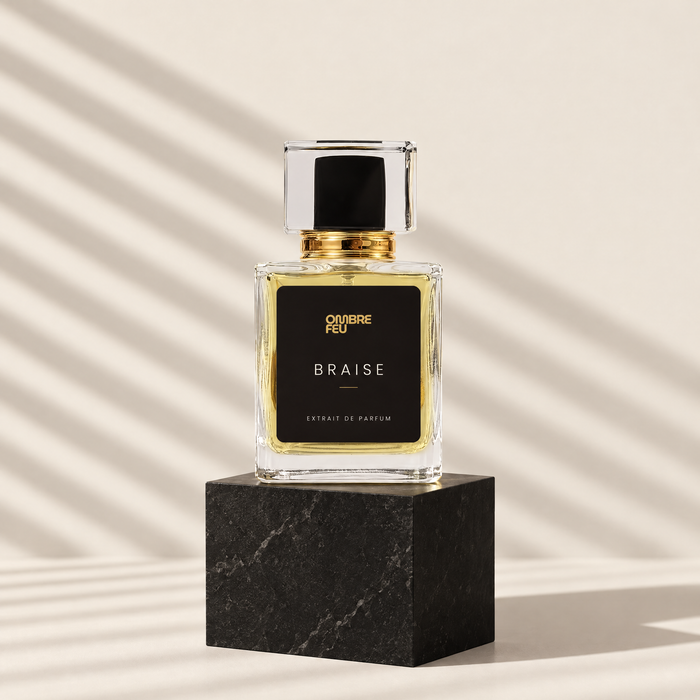
- Braise – warm, spicy and leathery, for the evening and the cold months.
- GOAT – radiant and sweet-woody with blood orange, fig and honey, for him, for day and evening.
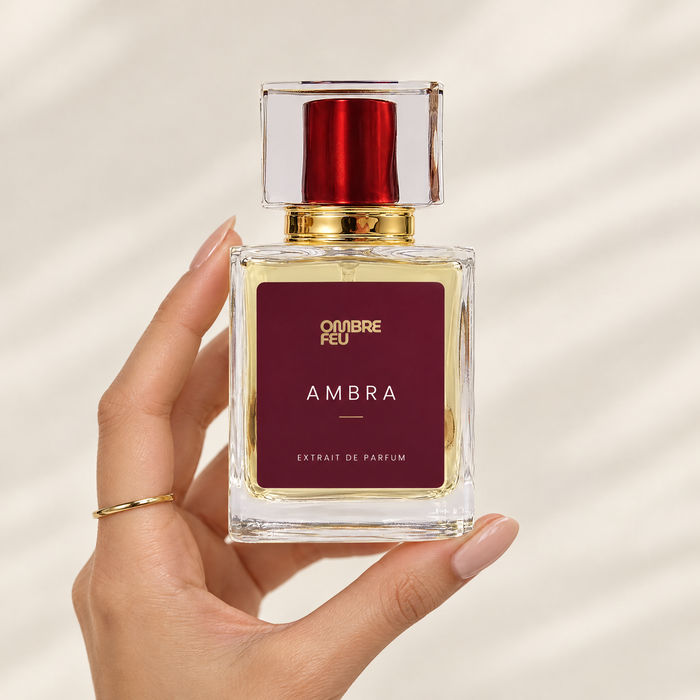
- Ambra – creamy and sweet with pear, pistachio, praline and bourbon vanilla, our fragrance for her.
- Nuit Bédouine – fruity-woody with an oriental character, with pineapple, patchouli and cedarwood, for him, for day and evening.
- Lune Dorée – captivating and oriental with vanilla, praline and oud, for her, for special evenings.
You’ll find the complete fragrance pyramids of all five on The fragrances.
Conclusion
Extrait de parfum is the densest form of a fragrance: usually 20–40% fragrance oil, long longevity, a calm presence close to the skin and economical use. It isn’t louder, but deeper. If you want a fragrance that you apply in the morning and that stays with you into the evening, an extrait is the right concentration – provided you apply it with care.
Frequently asked questions
What is extrait de parfum?
The highest common fragrance concentration. An extrait usually contains 20–40% fragrance oil, considerably more than an eau de parfum or eau de toilette. Our extraits contain 30% fragrance oil.
Is extrait de parfum stronger than eau de parfum?
It generally lasts longer and feels denser. But that does not automatically mean it is louder: an extrait often stays closer to the skin than an eau de toilette.
How many sprays of extrait do I need?
For everyday wear, one to two sprays are usually enough; for the evening, two to three. At the office, a single spray is often plenty.
How long does extrait de parfum last?
That depends on the raw materials, your skin and the amount applied. Our extraits last 9–14 hours on the skin.
How long does an extrait keep once opened?
A long time, if stored somewhere cool, dry and dark. Our bottles keep for 36 months after first opening.
- Eau de Cologne, Eau de Toilette, Eau de Parfum, Extrait de Parfum: the differences
- New: Lune Dorée – our captivating Extrait de Parfum for women
- Neu: Nuit Bédouine – unser fruchtig-holziger Extrait de Parfum für Herren
- Ombre & Feu Merch: Hoodies, T-Shirt, Gilet and Accessories at a Glance
- A Small Gift with Fragrance: Perfume Samples for Secret Santa and St Nicholas' Day
- Perfume for New Year's Eve: Which Scent Lasts All Night?
- Perfume for the Christmas Party: Subtle, Warm and Just Right
