


How to spot a counterfeit perfume: 9 telling signs
You can spot fake perfume by a missing or mismatched batch number, cheap packaging, a poorly finished bottle and a price far below market value. Nine concrete signs, and why counterfeits are a health risk.

Perfume is among the most frequently counterfeited products of all. The reasons are simple: high margins, small parcels, plenty of demand. The good news is that most counterfeits can be identified before they ever reach your skin – provided you know what to look for.
The most reliable way to spot a counterfeit perfume is the mandatory information on the packaging: a complete INCI list, a responsible person with an address in the EU, a batch number and clean printing. If any of these is missing, something is wrong. The scent itself only gives the fake away afterwards – through a sharp opening and poor longevity.
- Check the packaging first, then the bottle, and the scent last
- A price far below the usual level is almost always a warning sign
- Never apply it to your skin if you have any doubts
- Testers and decants are not counterfeits
Why this is about more than money
Before it goes on sale, a genuine perfume undergoes a safety assessment under the EU Cosmetics Regulation. A product information file exists, every ingredient is listed, fragrance allergens that must be declared, such as linalool or coumarin, are named, and a responsible person in the EU is liable for the product.
A counterfeit goes through none of this. Seizures regularly turn up substances that are not permitted in cosmetics. Possible consequences are skin reactions – redness, itching and, in isolated cases, contact eczema. That is the real reason to look closely, not the money lost on the purchase.
The nine signs
The order is deliberate: from the outside in. You check the first seven signs without using the fragrance at all. Only when everything adds up does your nose come into play.
A single sign rarely proves anything on its own. It becomes meaningful when several irregularities come together – say, a loose wrap, blurry print and a missing address. At that point you should stop using the bottle.
1. The cellophane wrap
Original film sits tight, is cleanly sealed along the edges and usually has one small, straight seam. Counterfeit film looks loose, has creases or crooked seals, or can be shifted without any resistance. A very strong smell of plastic when you open it is another bad sign.
2. Print quality and typography
Hold the box at an angle to the light. Originals have sharp-edged letters, even spacing and clean colour gradients. Counterfeits often show slightly blurred edges, uneven line spacing or a marginally wrong shade. Typos have become rare, but it is worth reading the spelling of the brand name carefully.
3. The mandatory information
This is the strongest sign, because it is where counterfeiters almost always get sloppy. Every pack sold in the EU must state:
| Information | What to check |
|---|---|
| Responsible person | Name and full address in the EU, not just a country name |
| INCI list | Complete, beginning with Alcohol or Aqua, allergens included |
| Nominal content | In millilitres, identical on the box and the bottle |
| Batch number | Present on the box and the base of the bottle – and identical |
| Warnings | Flammability warning, leaflet symbol where applicable |
Different batch numbers on the box and the bottle are a very clear sign. On originals they match. How to read the ingredient list in detail and what the individual names mean is explained in Reading the ingredients on a perfume.
4. The glass
Original bottles have glass of even thickness with no bubbles, clean joins and a flat base. Counterfeits often show trapped air bubbles, sharp mould seams along the sides or a slight lean when standing.
5. The atomiser
An original produces a fine, even mist with a dry click. Counterfeits often shoot a coarse jet, drip afterwards or have an audibly soft, spongy action. The dip tube is worth a look too: it should run straight down into the lower corner, not bend and stop halfway.
6. The cap
It should sit firmly and click noticeably into place. If it wobbles or can be put on crooked, take that as a hint. With many brands the cap also has a noticeable weight – a very light plastic cap on a supposedly high-end fragrance does not add up.
7. The colour of the liquid
Compare it with the manufacturer’s product photos. Counterfeits are often noticeably darker or strikingly intense in colour. One caveat: a genuine perfume that has been stored too long also darkens – but then the other signs will not be present as well. Why light and heat change the colour of a perfume is explained in Can perfume expire?.
8. The opening
Only now comes the scent – and at first on a test strip. Counterfeits often smell sharply of alcohol in the first moment, because the alcohol content is higher and the quality poorer. On an original, the alcohol note lifts within seconds.
9. The development
The most reliable scent-based sign. An original develops over hours, from the top note through the heart note to the base note. A counterfeit smells flat after twenty minutes and has disappeared after one to two hours, because the expensive base materials are missing. Our article on top, heart and base notes describes what this development looks like in a genuine fragrance.
The signs at a glance
| Checkpoint | Original | Warning sign |
|---|---|---|
| Wrap | tight, straight seam | loose, creased, crooked seam |
| sharp, even | blurred, wrong shade | |
| Mandatory information | complete, EU address | missing, incomplete, country name only |
| Batch number | identical on box and bottle | missing or different |
| Glass and cap | bubble-free, firm fit | air bubbles, wobbly cap |
| Atomiser | fine mist | coarse jet, drips |
| Scent development | evolves over hours | sharp, then quickly gone |
What is not a counterfeit
Not every deviation from what you see on the shop shelf means fraud. Three cases are often confused:
- Testers. Genuine stock intended for perfumeries to let customers try. Often without a cap, in a plain box, marked “Demonstration” or “Tester”. The contents are genuine.
- Decants. Small amounts that someone has transferred from an original bottle. Not fraud, as long as they are sold as decants – but you have to trust the person decanting, because the original packaging is missing.
- Grey market goods. Genuine products traded outside the official distribution channels. They are authentic, but sometimes older or stored differently.
And then there are dupes: independent fragrances modelled on a well-known original but sold under their own name. They are legal and not counterfeits. The difference is explained in Perfume dupes: are they worth it?.
Checking online offers – in five steps
- Who is really selling? On marketplaces the seller is often not the platform itself. Look up the retailer’s name.
- Read the legal notice. In Germany, commercial sellers are required to provide a full address with a name and a way to get in touch.
- Compare the product photos. Does the listing show its own photos or only the manufacturer’s images? Do the colour, cap and lettering match?
- Put the price in context. Small discounts are normal. Extreme discounts on a fragrance that is otherwise stably priced are not.
- Choose your payment method. A payment method with buyer protection gives you a second chance if there is a dispute.
Where counterfeits turn up most often
- Marketplaces with third-party sellers. Pay attention to who actually ships the item, not just the platform logo.
- Social media shops without a legal notice. Where there is no address for service, there is no liability either.
- Holiday purchases. Especially at markets and in street shops outside the EU.
- Offers far below market price. The grey market explains moderate discounts. It does not explain extreme ones.
This is particularly tricky with gifts: when you give someone a perfume, you often only see the product once it is unwrapped. What else to look out for when giving fragrance is covered in Giving perfume to men.
If you are unsure: ask the manufacturer
Sometimes almost every sign checks out and a doubt still remains. Then it is worth going direct. The responsible person named on the packaging is there for exactly this. Send them a short message with three details:
- the batch number from the box and the base of the bottle,
- a photo of the back with all the mandatory information,
- the retailer you bought it from.
Reputable manufacturers can often use the batch number to check whether a production run with these details exists. If no reply comes, or no reachable responsible person is named, that in itself is an answer.
Why small brands are less often affected
Counterfeiters bet on names everyone knows and that sell in large volumes. Small brands with direct sales are usually of no interest to them: there is no grey market in which goods could quietly disappear, and no big price gap that a supposed bargain could exploit. Even so, the same rule applies here: buy where the brand itself sells.
What to do if you have bought one
- Do not apply it. Neither to skin nor to clothing.
- Complain to the seller. Selling a counterfeit is a defect in the goods – you are entitled to have the purchase reversed.
- Keep the evidence. Hold on to the packaging, the bottle, the invoice and a screenshot of the listing.
- Notify the platform. Via buyer protection and the reporting function for trade mark infringements.
Why we don’t have to worry about counterfeits – and why you can still check us
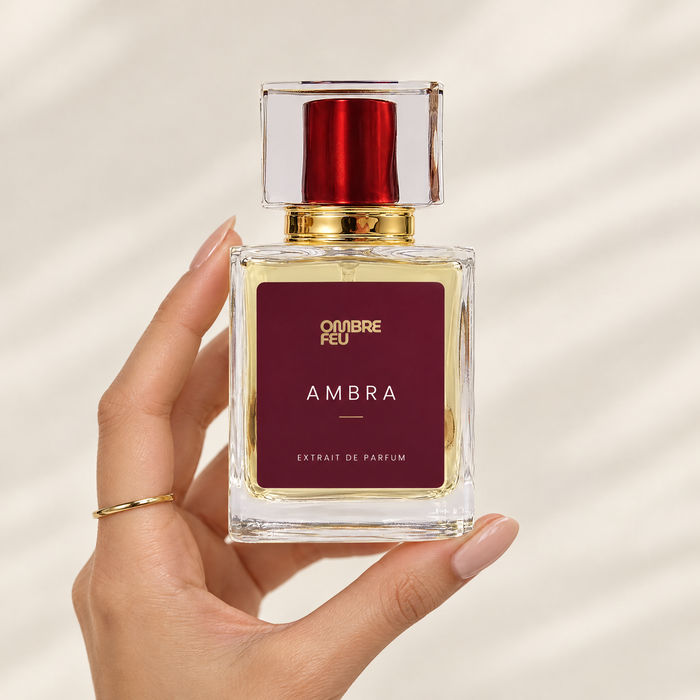
Braise, GOAT and Ambra are bottled in Germany and sold exclusively through this shop. There are no intermediaries, no grey market goods and therefore no price gap in which counterfeits would pay off. All three are extraits de parfum with 30% fragrance oil in 50 ml, each priced at €49.90, in an angular glass bottle with a coloured cap: black for Braise, green for GOAT, red for Ambra. You can find the whole collection here in the shop.
All the mandatory information – responsible person, ingredients, fragrance allergens that must be declared – is on our Ingredients and product safety page and in the legal notice. In other words, exactly the details whose absence is the first warning sign described above. Answers on shipping, returns and shelf life are in our FAQ.
Conclusion
A counterfeit almost always gives itself away before it touches your skin: in the wrap, in the print and, above all, in missing or contradictory mandatory information. Check from the outside in, compare the batch numbers and let your nose decide only at the very end. And buy where it is clear who is selling and who is liable. Then a perfume remains what it should be – a pleasure, not a risk.
Frequently asked questions
How do you recognise a counterfeit perfume?
Most reliably by the packaging and the mandatory information: a missing or incomplete INCI list, no responsible person with an EU address, a missing batch number, sloppy print quality and loose cellophane wrapping. In the fragrance itself, counterfeits often reveal themselves through an alcoholic, harsh opening and through the fact that nothing is left after a short time.
Is counterfeit perfume harmful to health?
It can be. Counterfeit fragrances undergo no safety assessment under the EU Cosmetics Regulation. Seizures have repeatedly turned up substances that are not permitted in cosmetics, among them plasticisers and undeclared allergens. Skin reactions are the most common consequence.
Is buying a counterfeit a criminal offence?
Private acquisition of small quantities for personal use is not a criminal offence in Germany. Selling, commercial importing and offering for sale are. Customs can seize and destroy shipments, including private purchases from outside the EU.
Are testers and decants counterfeits?
No. Testers are genuine goods in plain packaging for the trade; decants are originals transferred into smaller bottles. Both are legal as long as they are labelled as such. With decants, however, the original packaging is missing as a means of checking – here it comes down to trust in the seller.
What should I do if I have bought a counterfeit perfume?
Do not apply it to your skin. Complain to the seller – selling counterfeits is a defect in the goods, and you are entitled to unwind the purchase. For marketplace purchases, use buyer protection and report the listing. Keep the packaging and the invoice.
Why are some genuine bottles so cheap?
Grey-market goods, discontinued batches, testers and large purchase volumes explain price differences of 30 to 50 per cent. But if a current fragrance is 80 per cent below the usual price, that is not a bargain but a warning sign.


- Eau de Cologne, Eau de Toilette, Eau de Parfum, Extrait de Parfum: the differences
- New: Lune Dorée – our captivating Extrait de Parfum for women
- Neu: Nuit Bédouine – unser fruchtig-holziger Extrait de Parfum für Herren
- Ombre & Feu Merch: Hoodies, T-Shirt, Gilet and Accessories at a Glance
- A Small Gift with Fragrance: Perfume Samples for Secret Santa and St Nicholas' Day
- Perfume for New Year's Eve: Which Scent Lasts All Night?
- Perfume for the Christmas Party: Subtle, Warm and Just Right
