
How long does perfume last? 9 tips for better longevity and sillage
Why perfume lasts for hours on some people and disappears after 90 minutes on others - and nine concrete steps that noticeably extend the longevity of your fragrance.
“Perfume just doesn’t last on me.” I hear this all the time – and in nine out of ten cases it can be changed. Longevity is not a property a fragrance either has or lacks. It is the result of concentration, skin condition, application technique and storage. Three of those four you can do something about straight away.
An eau de parfum lasts five to eight hours on normal skin, an eau de toilette three to five. Anyone well below that usually has dry skin, applies it the wrong way, or keeps the bottle in the bathroom. The single most effective measure is an unscented lotion before spraying.
- Biggest lever: well-cared-for, slightly oily skin
- Second biggest: hitting the right spots instead of spraying into the air
- Store it dark, cool and upright – never in the bathroom
- Don’t reapply just because you can no longer smell it yourself
What you can realistically expect
Before we come to the measures, some context. These figures apply to normal skin at room temperature:
| Concentration | On the skin | On clothing |
|---|---|---|
| Eau de Cologne | 1–2 hours | up to 1 day |
| Eau de Toilette | 3–5 hours | 1–2 days |
| Eau de Parfum | 5–8 hours | 2–4 days |
| Extrait de Parfum | 8–12 hours | several days |
Every fragrance lasts considerably longer on clothing, but it stops developing there. More on the concentration levels in our piece on eau de parfum and eau de toilette.
The fragrance family plays its part
Two fragrances at the same concentration can differ by hours in longevity – because their raw materials have different weights. As a rough guide:
| Fragrance family | Typical raw materials | Longevity |
|---|---|---|
| Citrus / aquatic | Bergamot, lemon, calone | Short |
| Aromatic / fougère | Lavender, sage, coumarin | Medium |
| Woody | Cedarwood, sandalwood, vetiver | Long |
| Oriental / sweet-woody | Vanilla, tonka bean, amber, tobacco | Very long |
If longevity is what you are after, the bottom two rows are where to look. Which of these families works in which season is covered in our piece on sweet-woody fragrances for autumn and winter.
1. Look after your skin before you spray
Fragrance oils bind to fat. Dry skin gives them nothing to hold on to – the alcohol evaporates and takes the fragrance with it. An unscented lotion or a drop of jojoba oil on the pulse points before spraying is the single most effective measure there is. On very dry skin it frequently doubles the wear time.
2. Spray onto warm, slightly damp skin
Straight after a shower the skin is warm and receptive. That is exactly when it takes fragrance up best. Towel off, wait a moment, moisturise, spray – in that order.
3. Aim at pulse points, not into the air
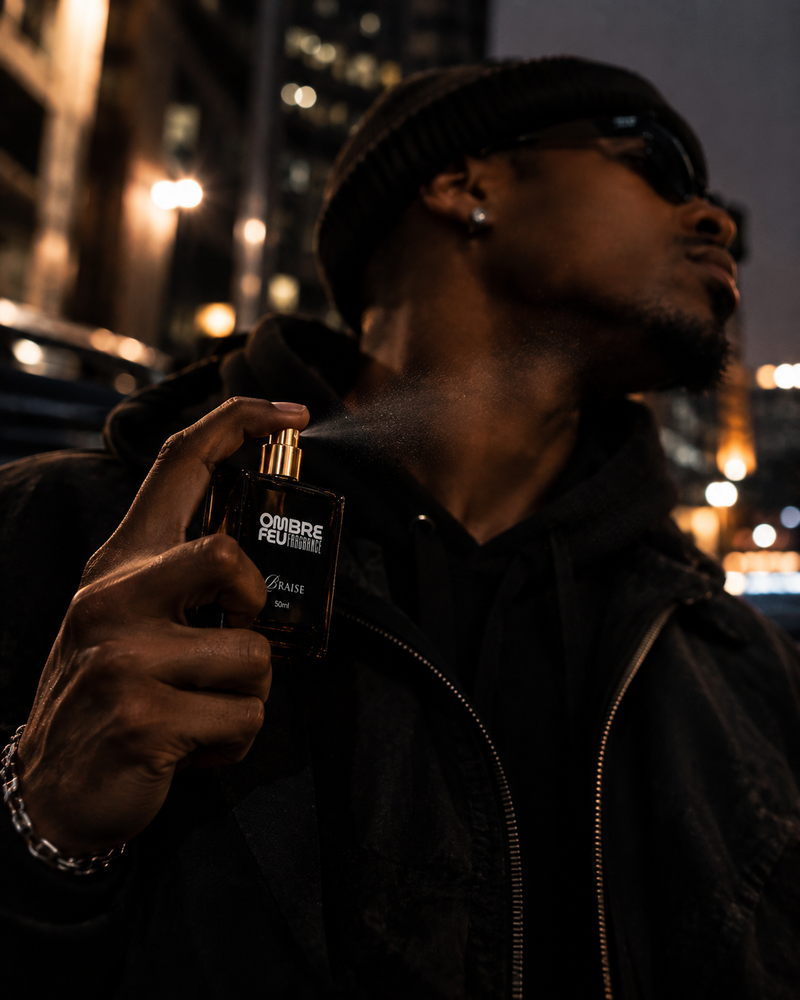
Throat, nape, upper chest, wrists, inner elbows. The blood vessels sit close to the surface there and give off a steady warmth that keeps the fragrance evaporating over hours. The popular mist you walk through leaves most of it in the room rather than on you.
4. Don’t rub it in
Rubbing your wrists together destroys the volatile top notes and shortens the whole development. Just let it dry. We cover this and six other common mistakes in detail in how to apply perfume properly.
5. Use layers
Layering means several products from the same fragrance family on top of one another. A shower gel or deodorant with a related character underneath the perfume extends its effect without becoming obtrusive. What matters is that the products don’t contradict each other – a citrus deodorant stick under a sweet-woody fragrance works against it. If you prefer to keep things simple, use a neutral base and let the perfume alone speak.
6. Put a little on your clothing – but do it right
One spray on the inside of the collar or on the lapel often lasts for days. It doesn’t replace applying to the skin, it complements it. Take care with silk, light wool and leather: fragrance oils can leave marks. When in doubt, test on a hidden spot.
7. Store the bottle properly
Light, heat and temperature swings break fragrance molecules down. The bathroom is the worst place imaginable – it combines all three. The right way: dark, cool, standing upright, ideally in its original box.
Stored like this, an unopened bottle keeps for three to five years, an opened one usually two to three. The heavier the base, the longer – a citrus fragrance is far more delicate than an amber-tobacco one.
8. Recognise when a perfume has turned
The signs are a noticeably darker colour, a sour or metallic opening, and a top note that vanishes immediately. In that case it isn’t your nose that is at fault but oxidation – oxygen in the half-empty bottle attacks the light molecules first.
Which leads to an uncomfortable truth: use your favourite fragrance, don’t save it. A bottle that has sat in the cupboard for three years “for special occasions” is rarely still the fragrance you fell in love with.
9. Don’t trust your nose
After roughly 20 to 30 minutes your sense of smell filters out your own fragrance – olfactory adaptation. Reapply at that point because you “can’t smell anything any more” and you are wearing far too much for everyone else. Trust the clock rather than the feeling: if you want to know whether your fragrance is still there, smell the inside of your collar or ask someone.
Is it you or the fragrance? A quick self-test
- Spray twice onto a test strip or a piece of paper and set it aside.
- Spray twice onto moisturised skin on your throat.
- Check both after four hours.
If the paper still smells clearly but the skin doesn’t, it is down to your skin or your technique – in which case points one to five apply. If the paper is almost empty too, it is down to the fragrance or its age.
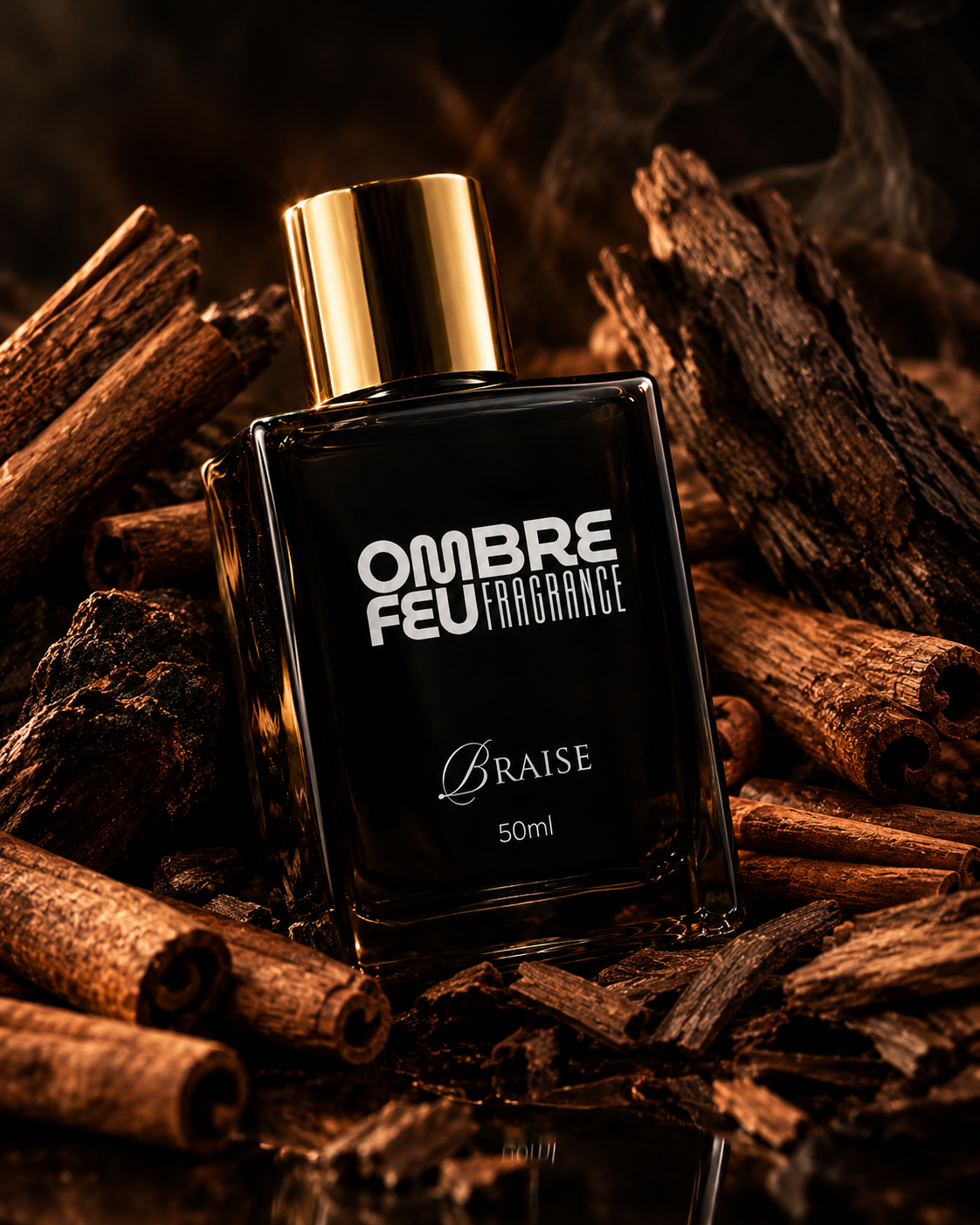
Braise and the question of longevity
The base of Braise #1 – vanilla, tonka bean, tobacco, sandalwood and amber – belongs to the heaviest and slowest groups of raw materials there are. As an eau de parfum at a correspondingly high concentration, the fragrance typically stays present on well-cared-for skin all evening without ever becoming loud. How the development shifts over those hours is shown in our piece on top, heart and base notes.