


Why does perfume smell different on everyone? Skin chemistry, skin type and fragrance explained
Perfume smells different on everyone because skin type, skin temperature, oiliness and skincare products change how the fragrance molecules evaporate. What is actually proven, and how to test how a fragrance really smells on you.

You smell a fragrance on a friend, love it and buy it. At home, on you, it smells – different. Not wrong, but different: sweeter perhaps, or flatter, or gone sooner. That isn’t your imagination. A perfume is only complete once it is on the skin, and every skin is a slightly different canvas.
In short: The same fragrance can smell different on different people. The main reasons are skin type, skin temperature and the skincare products you use. The skin’s pH, its own natural scent and the nose of whoever is smelling also play a part. The differences usually concern nuances, intensity and longevity – not the fundamental character of a fragrance.
- Oily skin usually holds fragrance longer, dry skin lets it fade faster
- Warmer skin boosts projection, and top notes fade faster
- Skincare products, deodorant and shower gel change the impression
- A paper strip shows the fragrance, not your version of it
- So: always test on your own skin and over a whole day
Perfume is completed on the skin
A perfume consists of alcohol and fragrance oil. Once sprayed on, the alcohol evaporates and the fragrance molecules rest on the surface of the skin. From there they evaporate gradually – the light top notes first, the heavy base notes last. How quickly this happens and which facets come to the fore depends on the surface underneath. And that surface is your skin, with its temperature, its oil content and its own natural scent.
How the top, heart and base notes appear one after another is explained in Top note, heart note, base note.
Skin type: oily or dry
Perhaps the most important factor is the skin’s oil content. Many fragrance molecules dissolve well in oils. On oily skin they therefore find more to hold on to, evaporate more slowly and stay noticeable for longer. Dry skin lacks this hold – the fragrance fades faster and often seems quieter.
| Skin type | Typical effect | What helps |
|---|---|---|
| Oily skin | Fragrance lasts longer, can seem more intense and slightly warmer | Apply more sparingly |
| Normal skin | Fragrance usually develops the way it was composed | The usual amount |
| Dry skin | Fragrance fades faster, seems quieter | Apply an unscented lotion beforehand |
If you have dry skin, a simple moisturiser can make a big difference. How to layer skincare and fragrance sensibly is explained in Fragrance layering for men.
Skin temperature
Warmth speeds up evaporation. On warm skin a fragrance projects more strongly, the top notes fade faster and the warmer base notes come through earlier. On cooler skin the same fragrance develops more slowly and stays closer to the body.
This also explains why a fragrance comes across differently in summer than in winter, after sport than at your desk. And why warm, woody fragrances often work particularly well in the cold – more on this in Men’s fragrance for autumn and winter and on our page Winter fragrance for men.
Climate, humidity and surroundings
Not only your skin but also the air around you changes a fragrance. In warm, humid air it carries further and often seems sweeter; in dry, cold air it stays quieter and closer to the skin. A fragrance you loved on holiday can therefore seem more muted at home in winter – even though neither the fragrance nor your skin has changed. Indoor spaces play their part too: heated air dries out the skin, air-conditioned rooms hold fragrance in the room for longer.
The skin’s pH
The skin’s surface is slightly acidic; for most people its pH lies in the slightly acidic range. This protective acid mantle varies a little from person to person and from one part of the body to another. The pH is often named as the main reason why a perfume “smells different on everyone”.
Caution is called for here: it is plausible that pH can influence individual fragrance molecules. How large its share really is compared with skin type, temperature and skincare, however, cannot be stated across the board. It is one factor among several – not the one explanation.
Natural scent, diet and medication
Every skin has a faint scent of its own, which blends with the perfume. It comes from sebum, sweat and the natural microorganisms on the skin, among other things. This underlying tone is individual and can change in everyday life.
It is also often said that diet or medication can influence how a fragrance smells. In very general terms, it is possible that changes in the body show up in the skin’s natural scent and so have an indirect effect on the fragrance. Concrete, reliable rules – for instance that certain foods make a fragrance sweeter – cannot be derived from this. If you notice that a familiar fragrance has changed noticeably on you, there can be many causes, including a change in how your own nose perceives it.
Skincare products: the underestimated factor
What is on your skin before the perfume goes on often changes the impression more than skin chemistry itself. A scented shower gel, a fragranced lotion, a deodorant with its own scent – all of this mixes with your perfume. If a fragrance smells different on a friend than on you, these products are the first thing worth checking.
Where you spray also plays a part. The neck and chest are warmer than the forearm. The most common mistakes when applying fragrance are covered in How to apply perfume: 7 mistakes.
Clothing, hair and fabrics
Part of what others smell on you doesn’t come from your skin at all, but from a scarf, a shirt collar or your hair. Fabrics often hold fragrance molecules longer, but they change the picture: on wool it is mainly the heavy base notes that linger, while the fresh notes fade there just as quickly as on skin. Detergents and fabric softeners also bring their own scents, which mix with your perfume. If a fragrance smells particularly good on someone, you may well be noticing a blend of perfume and a freshly washed jumper.
Your own nose
One last factor lies not on the skin but in perception. Everyone smells slightly differently: some people perceive certain fragrance molecules more strongly, others barely at all. A well-known example is certain musk molecules, which some people smell clearly and others hardly at all. Then there is habituation. After a short while you perceive your own fragrance more faintly, while others continue to smell it. So part of the difference between “on him” and “on me” lies in who is smelling – not only in what.
Which notes change the most
Not every component of a perfume reacts to the skin to the same degree. Roughly speaking: the more volatile and the closer to the skin a note is, the greater the differences between two people.
| Note | Typical behaviour | How much it varies |
|---|---|---|
| Citrus (bergamot, grapefruit, mandarin) | Very volatile, quickly gone on warm or dry skin | Strongly, above all in how long it lasts |
| Fresh spices (cardamom, pink pepper, ginger) | Shape the first few minutes, quieter afterwards | Moderately |
| Florals (rose, jasmine, neroli, iris) | Can seem more powdery on some skins, fresher on others | Moderately |
| Vanilla, tonka bean, amber | Become rounder and sweeter on warm, oily skin | Noticeably, above all in sweetness |
| Musk and ambroxan | Merge with the skin’s own scent, perceived with very different intensity | Very strongly |
| Woods (cedar, vetiver, sandalwood) | Stable and reliable, they form the backbone | Rather little |
This helps you judge: if it was mainly the freshness of a fragrance that won you over, you will notice the biggest differences in longevity. If it was the sweetness, it may turn out stronger or more restrained on you.
How to test a fragrance on your skin
- On clean skin with no other scents. No scented deodorant, no fragranced lotion on the test area.
- One spray, don’t rub. Ideally on the inner arm or wrist if you want to compare.
- No more than two fragrances at once. One per arm, otherwise the impression gets blurred.
- Smell it throughout the day. After ten minutes, after one hour, after four and after eight hours. Only then will you know how the fragrance develops on you and how long it lasts.
- A second test on another day. Temperature and how you feel on the day change the impression.
How long a fragrance lasts in general and what you can do to influence it is explained in How long does perfume last?. If you are currently searching, our article Find your signature scent will help.
What to do if a fragrance doesn’t work on you
Sometimes a fragrance simply doesn’t suit your skin. Before you give up on it, a few adjustments are worth trying:
- Neutralise your skincare. Use an unscented shower gel and deodorant for a week – often that alone changes the impression.
- Change the spot. On the warmer chest a fragrance seems rounder, on the cooler forearm clearer. Try out what suits you better.
- Adjust the amount. If a fragrance becomes too sweet on you, there is often simply one spray too many.
- Consider the season. A warm fragrance that felt heavy in summer can suddenly be just right in autumn.
- Rethink the direction. If a whole style of fragrance always tips over on you, a different fragrance family may be the better choice. For guidance, see Which fragrance suits me?.
When two people wear the same fragrance
The effect of skin becomes especially clear when two people wear the same fragrance or two related ones. What seems spicier and drier on one shows up softer and sweeter on the other. That is exactly the appeal of a fragrance pairing: a shared base that unfolds differently on two skins. How this works is described in Perfume for couples.
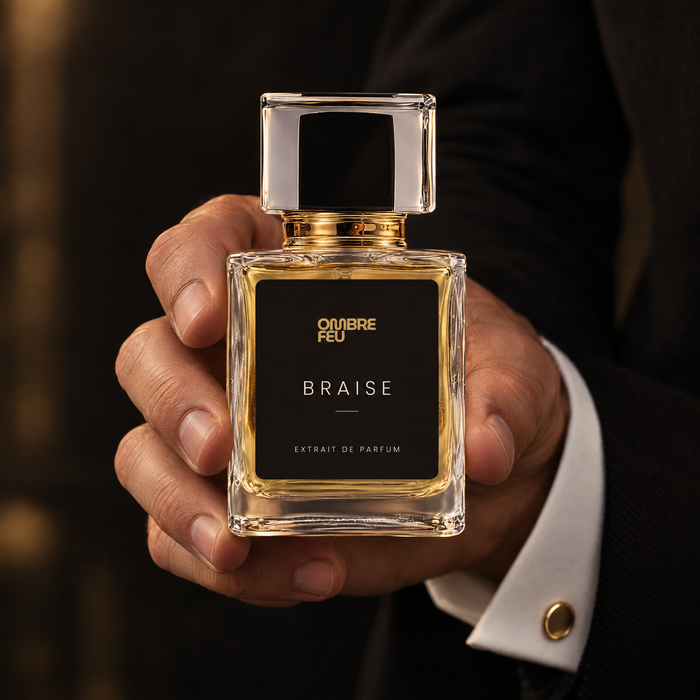
Braise on your skin
Braise is a warm, spicy, oriental-woody fragrance with a base of leather, vanilla, tonka bean, tobacco, sandalwood and amber. Base notes like these respond particularly to skin warmth: on warm skin, vanilla and tonka bean come through earlier and rounder; on cooler skin, cardamom, pink pepper and the powdery iris stay in the foreground for longer. The 9–14 hours of longevity of this extrait de parfum are a range, not a fixed figure: on oilier skin Braise tends towards the upper end, on dry skin towards the lower – an unscented lotion beforehand can make up the difference.
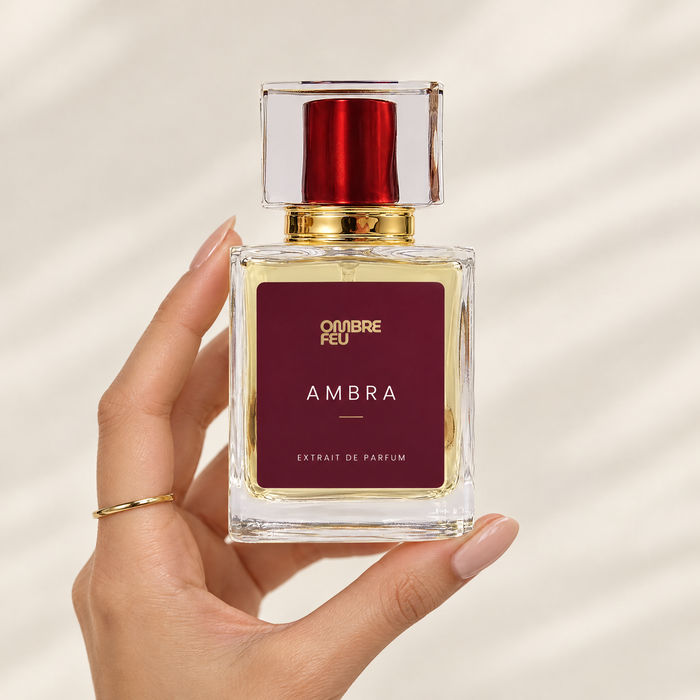
That is why our advice is: wear Braise for a whole day on your own skin before you form a judgement. The same goes for GOAT, our radiant, sweet-woody men’s fragrance, and for Ambra, which shares the warm vanilla in its base with Braise. You’ll find all our men’s fragrances at a glance under Men’s fragrances, and answers to common questions in our FAQ.
Conclusion
A perfume smells different on everyone because its story is only finished on the skin. Skin type and temperature determine how quickly the notes fade, skincare products and clothing join in, and in the end the nose of whoever is smelling has its say too. That isn’t a flaw but the beauty of a fragrance: it becomes yours. So never test only on paper or on other people, but always on your own skin, over a whole day – from the first minute to the last base note.
Frequently asked questions
Why does the same perfume smell different on everyone?
Because every skin is a slightly different canvas. Skin type, skin temperature, natural scent and the skincare products used influence how quickly the fragrance substances evaporate and which facets come to the fore. The differences usually concern nuances, intensity and longevity.
Does perfume last longer on oily skin?
As a rule, yes. Many fragrance substances dissolve well in oils and evaporate more slowly on oily skin. On dry skin, by contrast, a fragrance fades faster. An unscented lotion before spraying can compensate for this.
Does the skin's pH affect the fragrance?
It can influence individual fragrance substances and is one factor among several. How large its share is compared with skin type, temperature and skincare products cannot be stated across the board.
Why does my perfume smell different in summer?
Warmth speeds up evaporation. On warm skin, a fragrance projects more strongly, the top notes fade faster and the base notes come through earlier. In summer, fewer sprays are therefore often enough.
How do I test a perfume properly?
Spray the fragrance onto clean skin free of other scented products, without rubbing. Test no more than two fragrances at the same time and smell them throughout the day – after ten minutes, after an hour, after several hours. A second test on a different day gives you certainty.
Can a fragrance change on me over time?
That is possible. Changes in the skin, different skincare products or the season can change the impression. Often, however, it is also down to your own nose, which gets used to a familiar fragrance and perceives it more faintly.

- Eau de Cologne, Eau de Toilette, Eau de Parfum, Extrait de Parfum: the differences
- New: Lune Dorée – our captivating Extrait de Parfum for women
- Neu: Nuit Bédouine – unser fruchtig-holziger Extrait de Parfum für Herren
- Ombre & Feu Merch: Hoodies, T-Shirt, Gilet and Accessories at a Glance
- A Small Gift with Fragrance: Perfume Samples for Secret Santa and St Nicholas' Day
- Christmas Gift for Her: How to Find the Right Perfume
- Christmas Gift for Him: Which Perfume Really Suits Him?
