


Perfume layering for men: combining shower gel, body lotion and fragrance properly
With layering, you combine shower gel, body lotion and perfume so that they complement each other; neutral, unscented skincare is usually the best foundation. How the layers fit together and when combining two fragrances makes sense.
Before your perfume even touches your skin, you have often already applied three or four other scents: shower gel, shampoo, deodorant, perhaps an aftershave. Each of them smells of something. Perfume layering means deliberately coordinating these layers. Done well, your fragrance lasts longer and feels more rounded. Done badly, you smell like a muddle.
In short: Layering is less about more fragrance than about a good foundation. Moisturised skin generally holds fragrance longer than dry skin. The safest method: neutral or subtly scented skincare, with the perfume on top as the only distinct source of scent. Two perfumes on top of each other are possible, but they need a shared note and restraint with the amount.
- Unscented body lotion is the simplest layering base
- Shower gel and deodorant must not compete with the perfume
- Don’t mix aftershave scent and perfume at random
- Only combine two perfumes if they share a common note
- Layering increases intensity – so use fewer sprays rather than more
What perfume layering actually is
The term is used for two different things. On the one hand, for layering skincare products and perfume: shower gel, lotion and fragrance build on one another. On the other, for combining two or more perfumes to create a scent of your own. For most men, the first variant is the more sensible one – and the one where you are least likely to go wrong.
When layering is worth it
- Your fragrance fades quickly. A well-moisturised base is often the simplest fix.
- You have dry skin. Especially in winter, it holds fragrance poorly.
- You want to give a fragrance more depth. A matching lotion can quietly reinforce the base.
- You use several skincare products anyway. Then it pays to at least coordinate them.
Why moisturised skin holds fragrance longer
Fragrance molecules evaporate from the surface of the skin. On dry skin this happens faster, because there is little for the fragrance materials to bind to. A light layer of moisture or oil on the skin slows this evaporation. That is why perfume generally lasts longer on well-moisturised skin than on dry skin. The other factors that determine longevity are explained in How long does perfume last?.
Skin type plays a part here too. Why the same fragrance comes across differently on oily and dry skin is explained in Why does perfume smell different on everyone?.
The layers in the right order
1. Shower gel
The first layer is the most fleeting. The scent of a shower gel has usually largely gone once you have dried off. Even so, its direction is worth a look: a very intense, sweet or sporty-fresh shower gel can mask the opening of your perfume. Neutral or lightly scented is the safe choice.
2. Body lotion or moisturiser
This is the most important layer. An unscented lotion on the areas where you will spray later – neck, chest, back of the neck – creates a good foundation. Let it absorb briefly, then apply the perfume. If you like, you can choose a lotion with a matching scent direction, for example lightly woody or vanilla under a warm fragrance. What matters is that it supports the character of the perfume rather than changing it.
3. Deodorant
Deodorants are often more heavily scented than you think, and they sit close to the chest. A fresh, aquatic deodorant under a spicy evening fragrance creates a clash. An unscented or very subtle deodorant works best. Apply it before the perfume so the two aren’t rubbed together in the same spot.
4. Aftershave
Many aftershaves bring a distinct scent of their own. If you wear a perfume, reach for an unscented aftershave balm instead. It soothes the skin and doesn’t compete with your fragrance.
5. Perfume
Finally the perfume, sprayed onto the skin, not rubbed in. Where and how much is described in the seven mistakes when applying perfume.
Your five-minute layering routine
- Shower with a neutral shower gel, then dry off thoroughly.
- Apply deodorant – unscented or very subtle.
- After shaving, use an unscented balm, if you shave.
- Apply a thin layer of lotion to the neck, back of the neck and upper chest and let it absorb for one to two minutes.
- One to three sprays of perfume on the moisturised areas. Don’t rub, don’t top up.
What goes together – and what doesn’t
| Skincare product | Goes well with a warm, spicy perfume | Best avoided |
|---|---|---|
| Shower gel | neutral, lightly woody, lightly spicy | very sweet and fruity, very aquatic |
| Body lotion | unscented, lightly vanilla, lightly woody | intensely floral, citrus-heavy |
| Deodorant | unscented or very subtle | sporty-fresh, heavily scented |
| Aftershave | unscented balm | aftershave with its own strong scent |
The basic rule: the more distinct your perfume’s character, the more restrained everything underneath should be.
Combining two perfumes
The second form of layering – two fragrances on top of each other – is more for those who like to experiment. It can work, but it takes a certain feel. A few pointers:
- Look for a common note. Two fragrances that both contain vanilla, wood or a particular spice combine more easily.
- The heavier fragrance first. The denser, woodier fragrance forms the foundation, the lighter one goes on top.
- Combine simple fragrances. Two complex compositions layered on top of each other rarely produce more than noise.
- Less of both. One spray of each fragrance is enough. Two full doses result in too much intensity.
- Try separate spots. One fragrance on the neck, the other on the chest – that way they blend more gently than in the same place.
Which notes complement each other is easier to judge once you know how a fragrance is structured. The basics are explained in Top notes, heart notes, base notes, and the most important warm base notes are introduced in Vanilla, tonka bean, tobacco.
Which fragrance families can be combined
| Combination | Effect | Difficulty |
|---|---|---|
| Woody + spicy | warmer, drier, more grown-up | easy |
| Woody + fresh citrus | bright opening, calm base | easy |
| Amber/vanilla + spicy | deeper, more evening-like | medium |
| Aquatic + sweet oriental | often restless, contradictory | difficult |
| Two very sweet fragrances | quickly sticky and heavy | difficult |
How to test a new combination
- Test on a day off. Not before an important appointment, in case the result doesn’t convince you.
- Wear the layers individually first. One day, smell only lotion and perfume; the next, try the combination with the second fragrance.
- Wait for the dry down. Whether two fragrances go together shows after one to two hours, not in the first few minutes.
- Smell again in the evening. A good combination stays coherent to the end; a bad one falls apart into two separate smells.
- Ask an honest nose. Others often notice intensity and clashes more clearly than you do.
The underestimated layer: clothing
Clothing is a scent layer too. Detergent and fabric softener often leave a distinct, usually fresh and floral smell that clashes with a warm perfume. If you wear a spicy or woody fragrance, a detergent that is as neutral as possible is worth it. Conversely, a spray on the inside of your collar or on a scarf often holds the fragrance longer than skin – but it only complements it, it doesn’t replace it. Take care with silk and light-coloured fabrics: fragrance oils can leave stains.
Layering by season
In summer, the lightest version is usually enough: neutral shower gel, a thin, quickly absorbed lotion and a fresh fragrance. Heat intensifies every layer, so less is almost always more here. Ideas for the warm season can be found in Fresh men’s fragrance for spring and summer.
In autumn and winter, skin is drier and the air cooler. Now a richer lotion is worth it, ideally with a light vanilla or woody direction under a warm fragrance. Ideas for the cold season are collected on our page Winter fragrance for men.
The most common layering mistakes
- Too many sources of scent. Shower gel, shampoo, deodorant, aftershave and perfume, all with different scents – the result is restless and stronger than you notice yourself.
- Underestimating the total amount. A scented lotion plus the usual number of sprays can be too much. When layering, cut back by one spray.
- Perfume on wet skin. After showering, dry off first and let the lotion absorb.
- Scented products on sensitive skin. More fragrance materials also mean more potential allergens. If your skin reacts easily, unscented skincare is the better choice. How to read the information on the packaging is explained in Reading perfume ingredients.
Layering in everyday life
For the working day, the simplest version is often enough: neutral shower gel, unscented lotion, one spray of perfume. In the evening or in winter, a matching lotion lets you add a little more depth. How to wear your fragrance with restraint at work is covered in Fragrance at the office, and how it can come across in the evening in Fragrance for dates and evenings.
Layering Braise properly
Braise is an oriental-woody, spicy extrait de parfum with a warm base of leather, vanilla, tonka bean, tobacco, sandalwood and amber. It already brings plenty of depth and needs no second perfume on top. The best foundation is an unscented body lotion on the neck and chest. If you like, choose a lotion with a light vanilla or woody direction – it picks up the base without covering the spicy opening of cardamom and pink pepper.
Avoid very fresh, aquatic or sweet and fruity skincare products under Braise. With moisturised skin as a base, Braise lasts 9–14 hours. You’ll find more about the composition on The fragrances.
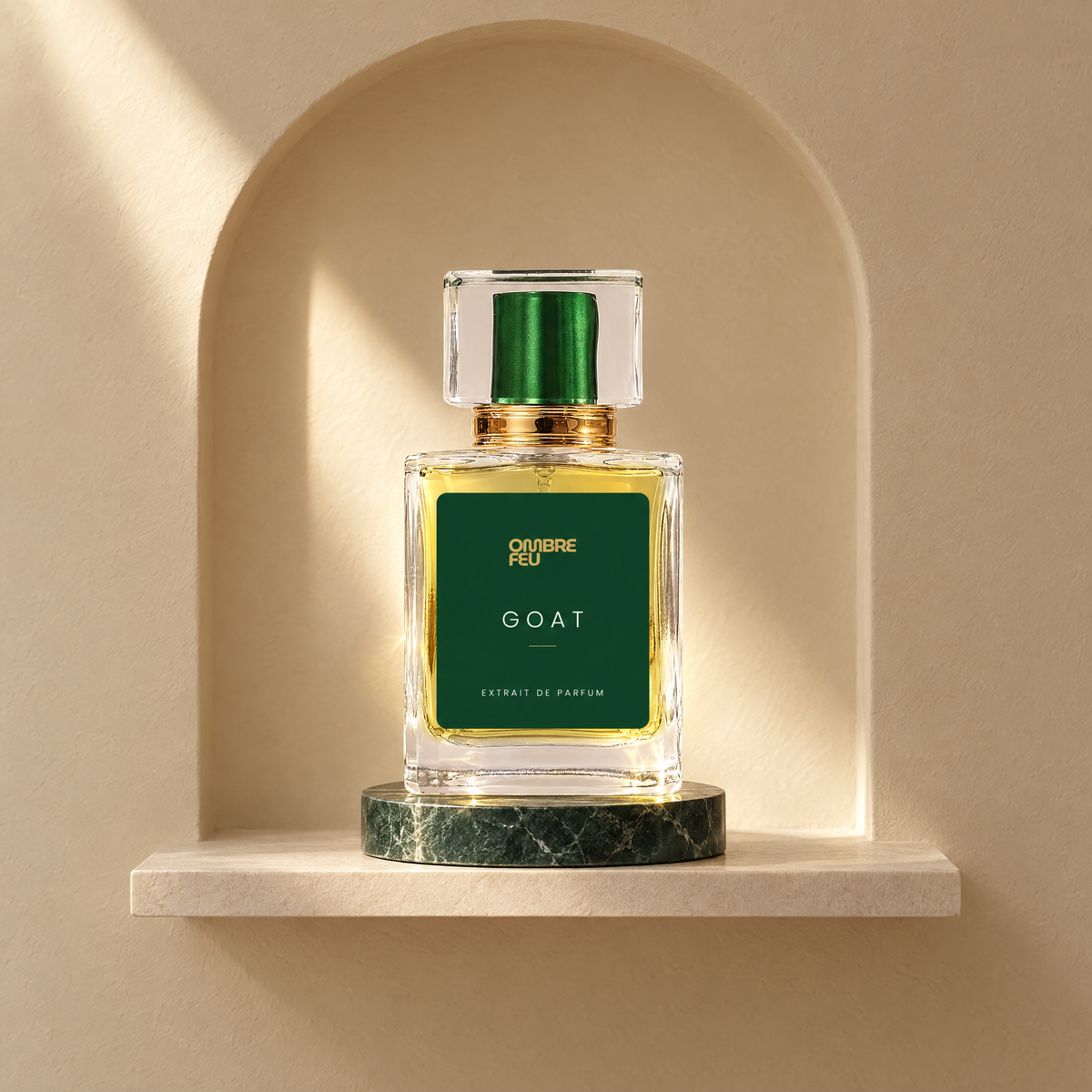
If you still want to experiment: GOAT harmonises with Braise through sandalwood and vanilla in the base. One spray of Braise on the chest and one spray of GOAT on the neck create a brighter, fruitier progression – for a day that runs into an evening out, for example. Both fragrances and more ideas can be found under Men’s fragrances.
Conclusion
Good layering goes unnoticed. It makes sure your perfume sits on a calm, moisturised foundation, lasts longer and doesn’t clash with shower gel, deodorant or aftershave. Start with unscented skincare, choose one perfume as the lead voice and only then experiment with two fragrances – sparingly, and with a shared note as the bridge.
Frequently asked questions
What is perfume layering?
Perfume layering refers to the deliberate layering of scents. It usually means coordinating skincare products such as shower gel, body lotion and deodorant with the perfume so that they work together. Sometimes the term also refers to combining two perfumes.
Does perfume last longer with body lotion?
As a rule, yes. On well-cared-for, lightly moisturised skin, fragrance substances evaporate more slowly than on dry skin. An unscented lotion on the areas where you spray is therefore a simple foundation.
Should your shower gel match your perfume?
At the very least, it shouldn't compete. A neutral or lightly scented shower gel is the safe choice. Very intense, sweet or aquatic shower gels can mask the opening of a warm perfume.
Can you wear deodorant and perfume at the same time?
Yes, but the deodorant should be as unscented or subtle as possible. Heavily scented deodorants sit close to the chest and mix with your perfume. Apply the deodorant before the perfume.
Can you wear two perfumes on top of each other?
That is possible if both fragrances share a common note, such as vanilla or wood. Apply the heavier fragrance first and the lighter one on top, and reduce the amount to one spray per fragrance.
Which body lotion suits a warm, spicy perfume?
An unscented lotion is the safest choice. If you want more depth, choose a lotion with a lightly vanilla or woody direction that picks up the base of the perfume instead of covering it.


- Eau de Cologne, Eau de Toilette, Eau de Parfum, Extrait de Parfum: the differences
- New: Lune Dorée – our captivating Extrait de Parfum for women
- Ombre & Feu Merch: Hoodies, T-Shirt, Gilet and Accessories at a Glance
- A Small Gift with Fragrance: Perfume Samples for Secret Santa and St Nicholas' Day
- Perfume for the Christmas Party: Subtle, Warm and Just Right
- Christmas Gift for Her: How to Find the Right Perfume
- Christmas Gift for Him: Which Perfume Really Suits Him?
