
Perfume Dupes and Imitations: How Good Are They Really?
Dupes promise the same fragrance for a tenth of the price. What lies behind them technically, where the line to counterfeiting runs and when a dupe genuinely pays off – without the marketing talk.
“Smells like the original, costs a tenth of the price.” Few promises are as widespread in the fragrance world – and as rarely explained properly. What a dupe is in technical terms, where the legal line runs and in which cases it is a sensible decision: it is all here. Without taking sides.
A perfume dupe is a fragrance deliberately modelled on a well-known original but sold under its own name. That is legal, because fragrance compositions are barely protected by copyright. A counterfeit, by contrast, pretends to be the original – and is a criminal offence.
- Dupe: own name, similar smell, legal
- Counterfeit: someone else’s name and bottle, illegal
- The typical weak point of dupes: the base note, and with it longevity
- Good dupes state an INCI list and a responsible person in the EU
Why dupes are allowed to exist at all
A fragrance is a strange thing in legal terms. The name is protected as a trade mark, the bottle as a design, the packaging as a work. The composition itself – the formula made up of raw materials – enjoys practically no protection in Germany. German courts have so far declined to recognise copyright protection for fragrance compositions; in the Netherlands there were isolated rulings to the contrary, but they did not prevail.
The result: anyone who analytically reconstructs the formula of a successful fragrance and sells the result under their own name is operating in an area that is, in practice, permitted. That is exactly what the entire dupe industry lives on.
Dupe, imitation, counterfeit – three different things
| Dupe / imitation | “Inspired by” fragrance | Counterfeit | |
|---|---|---|---|
| Name | Own name | Own name, reference to the original | Name of the original |
| Bottle | Own design | Own design | Copy of the original |
| Smell | Very similar | Similar direction | Usually worse than the original |
| Legal position | Permitted | Delicate where brands are compared directly | Trade mark infringement, a criminal offence |
| Safety documentation | Present in the EU | Present in the EU | Often none |
The middle column is the riskiest one. Advertising that states outright “our fragrance 21 corresponds to brand X” is regularly treated in Germany as unfair exploitation of another’s reputation. Reputable sellers therefore do without such comparison lists – even though buyers search for them.
Where dupes fail technically
A dupe usually comes about like this: a laboratory analyses the original by gas chromatography, identifies the main constituents and rebuilds them with cheaper substitutes. What works well in that process, and what does not, follows a clear logic.
The top note consists of a handful of molecules that are often synthetic and inexpensive – citrus, pepper, green notes. That part can be reproduced almost perfectly. Which is why dupes are often convincing in the shop and in the first few minutes.
The base, on the other hand, carries the cost: real sandalwood oil, iris butter, high-grade musk and amber molecules, natural oud. That is exactly where savings are made. The result is a fragrance that flattens out after twenty minutes, disappears after two hours and no longer develops. So if you have the impression that an inexpensive fragrance simply does not last – that is usually not a mistake in how you apply it, but a cost decision taken in the lab. What you can still do yourself to rescue longevity is in our nine tips on longevity.
Is a dupe a health risk?
Not in itself. Every perfume placed on the market in the EU has to comply with the Cosmetics Regulation: safety assessment, product information file, notification in the European portal, declaration of the ingredients and of those fragrance substances that must be listed, such as linalool or coumarin. That applies to a fragrance costing 15 euros just as much as to one costing 250 euros.
Two things do become critical: goods from direct imports without European labelling, and counterfeits. In seizures of the latter, substances have repeatedly been found that have no place in cosmetics. The price alone tells you nothing about this – the labelling does.
When a dupe is a good decision
- You want to get to know a direction. Before spending 150 euros on an oud fragrance, you can find out for 20 euros whether oud suits you at all.
- You need a fragrance for work. For eight hours in a warehouse or on a building site, an expensive bottle is a waste.
- You wear a lot every day. If you spray generously, you get through a bottle quickly – and then the inexpensive option adds up.
When it is not
- If you expect longevity. That is exactly where the savings are made.
- If the development matters to you. A dupe is optimised for the first impression, not for the fifth hour.
- If you are looking for something of your own. A dupe is by definition a copy of someone else’s idea. Anyone who wants a fragrance that belongs to them is in the wrong place.
An honest word about our own product
We could claim at this point that every dupe is a fraud. That would be convenient and untrue. A well-made imitation serves a purpose, and for many people it is the sensible choice.
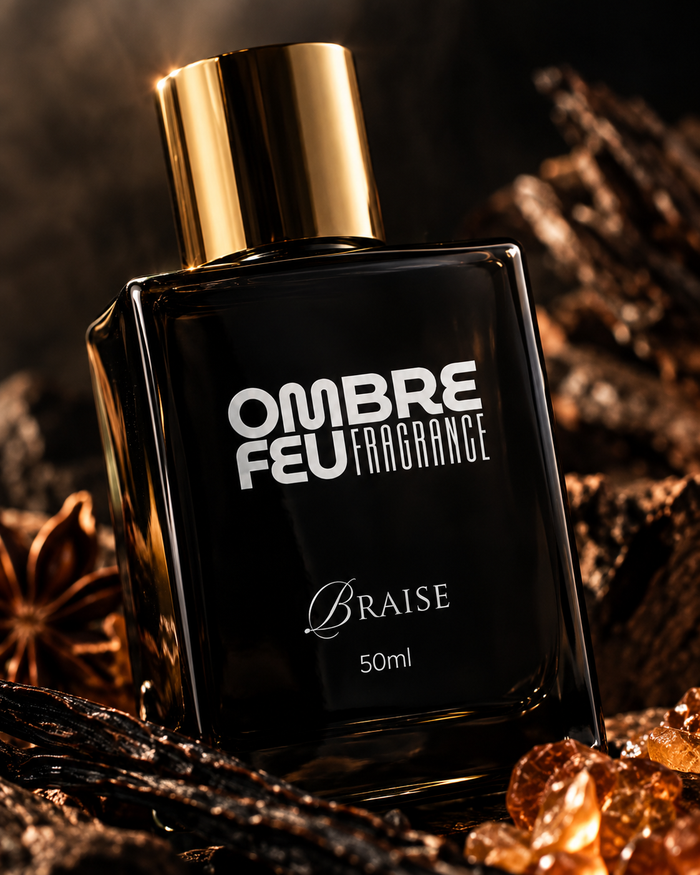
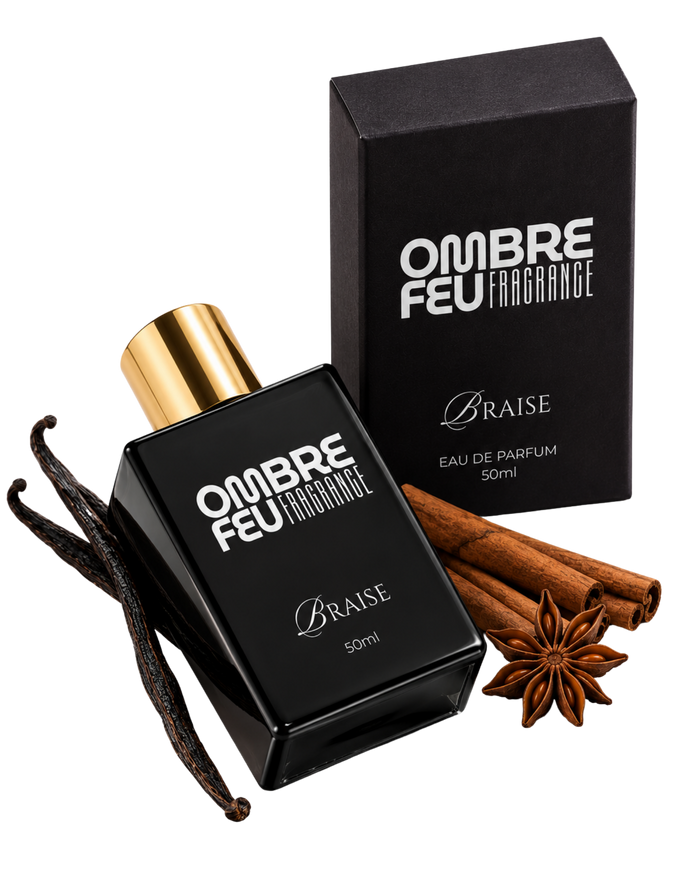
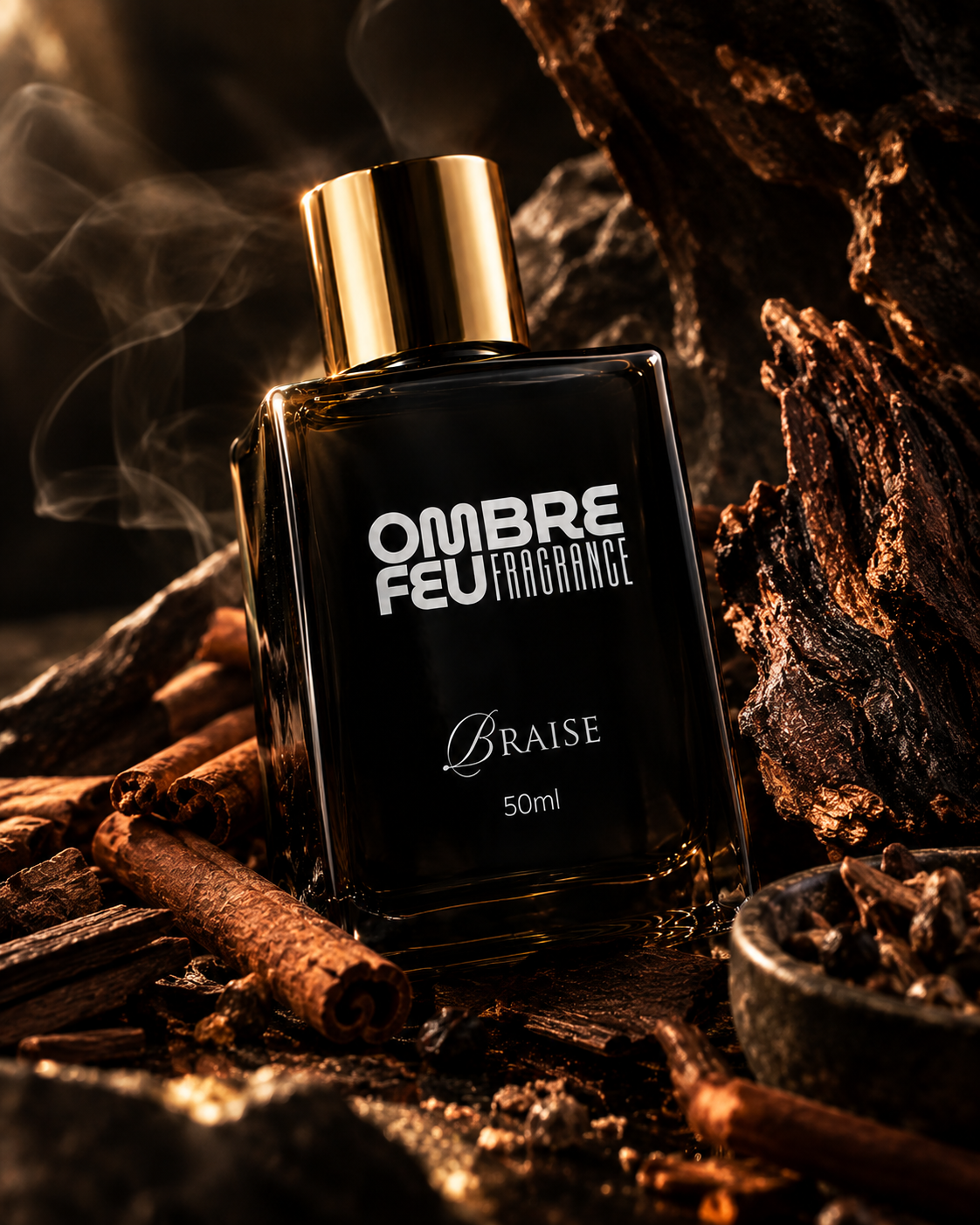
Braise #1 is not one. The fragrance was not built to match an original but developed from the ground up – with a perfume manufacturer in Germany, over several attempts, along an idea rather than a template. That comes at a price: 79.90 euros for 50 ml as an eau de parfum. In return you get a base of vanilla, tonka bean, tobacco, sandalwood and amber that lasts an evening, and a formula that exists nowhere else.
Whether that difference is worth it to you is your decision. We only tell you what you are paying for. The story behind it is in “Why Braise?”.