

Understanding fragrance notes: top note, heart note, base note – explained through Braise
Top note, heart note, base note: what the fragrance pyramid really means, how long each phase lasts and why a perfume smells different after five minutes than it does after five hours – explained through one specific fragrance.
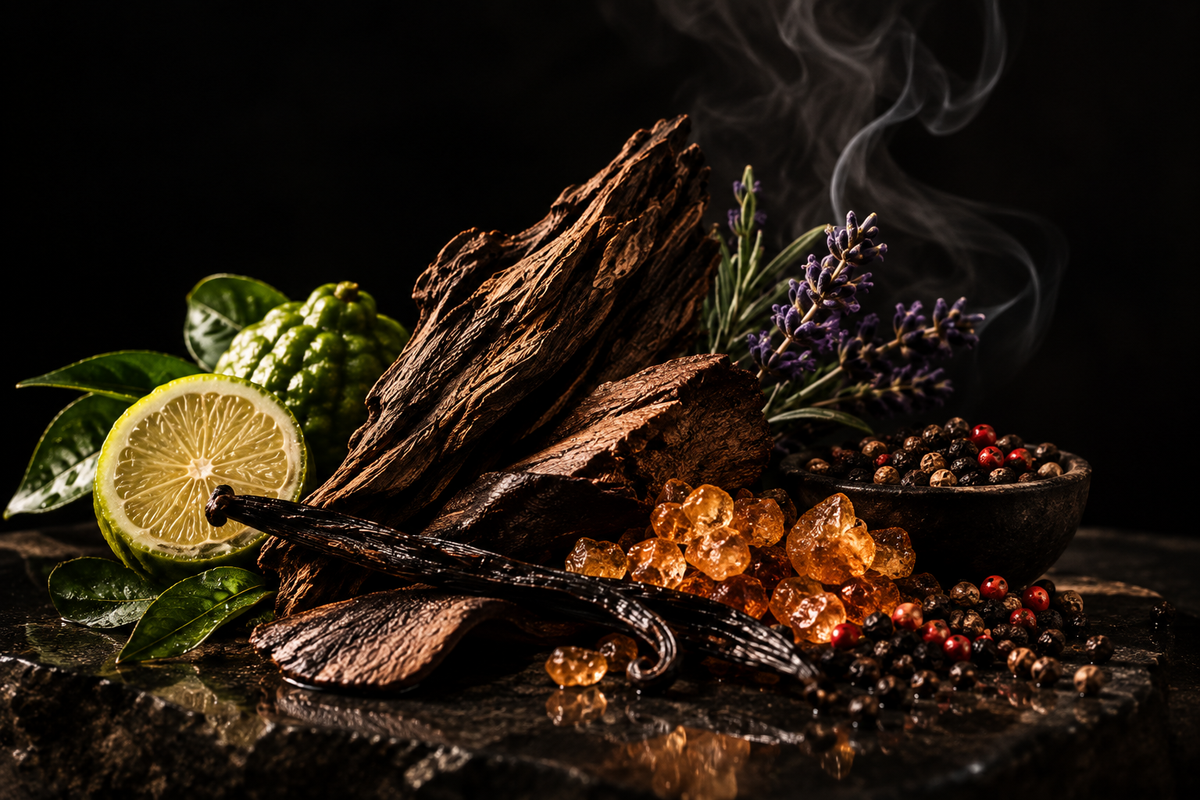
You spray a fragrance in a shop, you think it is wonderful – and at home it smells completely different. Nothing has gone wrong and nothing is fake: that is exactly how it is built. A fragrance is not a snapshot but a development over hours. Once you understand the three phases, you shop differently and you are disappointed far less often.
A fragrance unfolds in three phases. You smell the top note in the first 5 to 15 minutes, the heart note from minute 15 to around the three-hour mark, and the base note from hour three to the end. The reason is physical: light fragrance molecules evaporate first, heavy ones last.
- Top note: citrus, bright spices, green notes – it opens, but it doesn’t carry
- Heart note: florals, warm spices – the actual character
- Base note: woods, resins, vanilla, amber – what people remember
- When testing, wait at least 30 minutes, ideally half a day
The fragrance pyramid in one sentence
Fragrance molecules evaporate at different speeds. Light ones first, heavy ones last. Perfumery calls that order the top note, the heart note and the base note – drawn as a pyramid, because the base is the broadest and the longest-lived part.
| Phase | Period | Typical raw materials | Role |
|---|---|---|---|
| Top note | 0–15 minutes | Bergamot, lemon, pink pepper, cardamom, mint | Opening, drawing attention |
| Heart note | 15 minutes – 3 hours | Iris, rose, jasmine, cinnamon, nutmeg, sage | Carrying the character |
| Base note | from 3 hours | Vanilla, tonka bean, sandalwood, tobacco, amber, musk | Giving depth and longevity |
The top note: the first 5 to 15 minutes
The first impression. Top notes are made up of the most volatile molecules: citrus, fresh herbs, bright spices, green notes. They are loud, they are there immediately – and they are gone just as quickly.
Their job is not to define the fragrance but to open it. That is why judging a perfume after the first few seconds is a mistake. What you smell in the shop when you hold the paper to your nose is something you will practically never wear day to day.
One practical side effect: because top notes are so volatile, they are the quickest to reveal whether a bottle is past its best. If the opening is missing entirely and the fragrance smells sour straight away, it has oxidised.
The heart note: minute 15 to around hour 3
The real face of the fragrance. Heart notes are of medium weight and carry the main character: florals such as iris, jasmine or rose, warmer spices such as cinnamon and nutmeg, aromatic notes such as sage or lavender.
This phase is highly present for the longest and it decides whether a fragrance suits you. When you are testing a perfume, the half hour after application is the one that matters – not the first minute.
The base note: from hour 3 to the end
The foundation. Base notes consist of the heaviest molecules and evaporate the most slowly: woods, resins, vanilla, tonka bean, musk, amber, leather, tobacco. They give the fragrance depth and longevity – and they are what other people remember.
Many base notes are unspectacular on their own. Only in interplay with the heart and the top does something emerge that one would describe as a fragrance’s character. And because the base is the longest phase, it also determines longevity more than any other layer.
What the pyramid is not
A common misunderstanding: the three phases do not follow one another neatly like chapters. They overlap a great deal. Even in the first minute you are smelling parts of the base – they are simply covered by the louder top notes. And a good composition is built so that the transition happens imperceptibly.
The pyramid is also not a chemical standard but an aid to communication. Some houses list twenty notes, others five. That says nothing about quality – often the short list is the more honest one.
How to test a fragrance properly
- On the skin, not on paper. Only there does the base react to body warmth and skin pH.
- No more than two fragrances per visit. After that the nose is overloaded and barely distinguishes anything.
- Don’t decide straight away. Walk away, do something else, come back and smell again after two hours and after five.
- Coffee beans don’t help. The widespread trick doesn’t reset the nose, it only distracts it. Fresh air works better.
- Judge the effect on others. After three hours, ask someone whether they can still pick up the fragrance – your own nose grew used to it long ago.
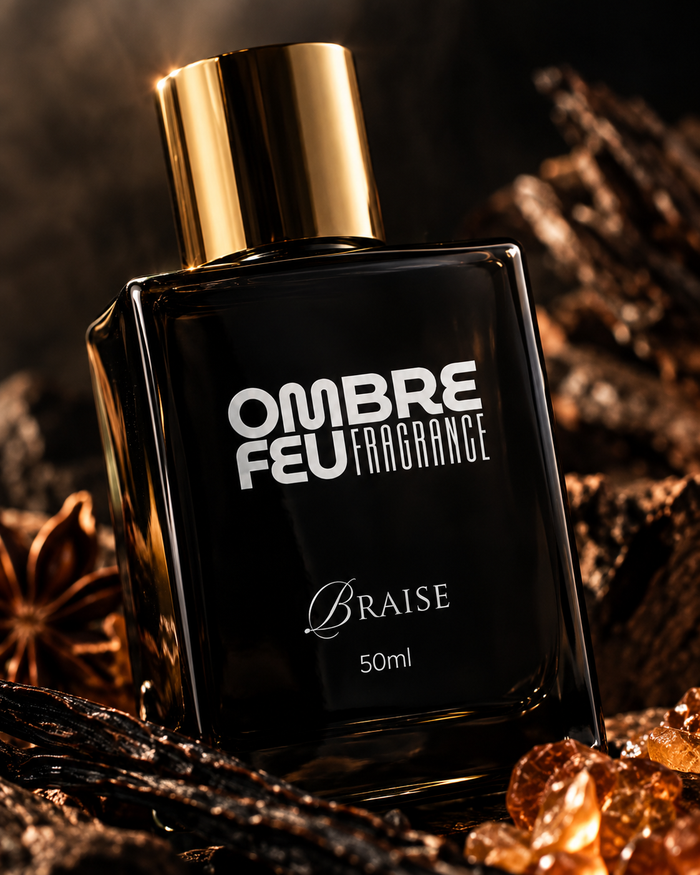
Braise as a concrete example
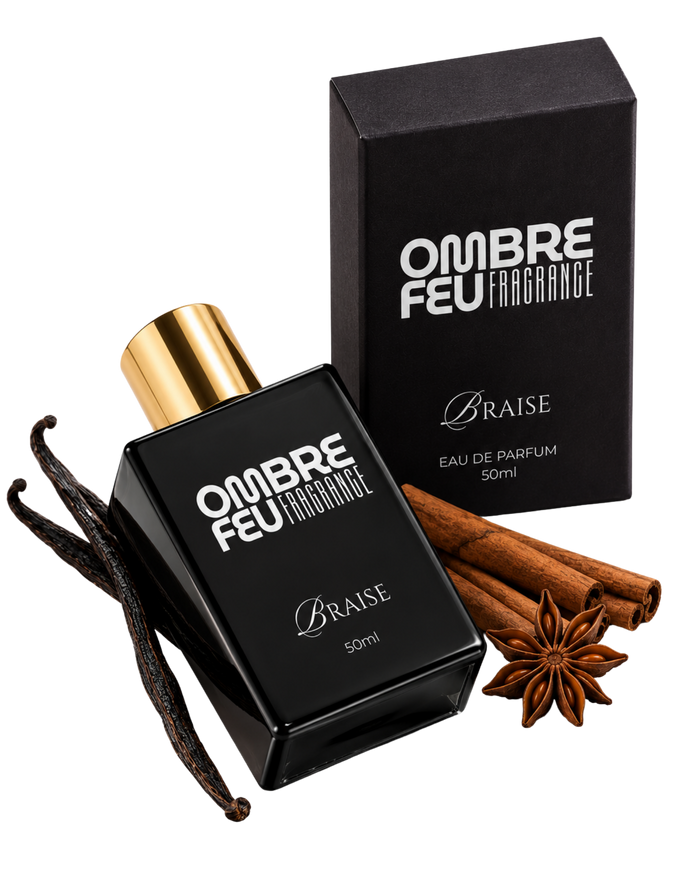
This is how the development runs in Braise #1:
- Top – cardamom, pink pepper, bergamot. A spiced, lightly citrus opening. Pink pepper brings the tingle, cardamom keeps it spicy rather than sour. After around ten minutes that steps back.
- Heart – cinnamon, iris, clary sage. Now it grows warmer. Cinnamon brings depth, iris a powdery, elegant structure that stops the fragrance turning sugary. Clary sage adds a dry, almost bitter edge.
- Base – vanilla, tonka bean, tobacco, sandalwood, amber. The longest phase and the core of the fragrance. Vanilla and tonka bean supply the warmth, tobacco the dark note, sandalwood the creaminess, amber the longevity.
That is why Braise smells spicy and fresh after ten minutes and warm and woody after four hours – and both belong to the same fragrance.
Further reading
If you want to know how to keep this development going as long as possible, read our nine tips on longevity and the seven most common mistakes when applying fragrance. Why the concentration decides whether you experience the base at all is covered in our comparison of eau de parfum and eau de toilette.