


Perfume Dupes and Imitations: How Good Are They Really?
Dupes imitate well-known fragrances, but rarely smell the same and often fade sooner; things get tricky as soon as the brand or packaging is copied. What's behind them technically, where the line to counterfeiting lies and when a dupe is worth it.

“Smells like the original, costs a tenth of the price.” Few promises are as widespread in the fragrance world – and as rarely explained properly. What a dupe is in technical terms, where the legal line runs and in which cases it is a sensible choice: it’s all here. Without taking sides.
A perfume dupe is a fragrance deliberately modelled on a well-known original but sold under its own name. That is legal, because fragrance compositions are barely protected by copyright. A counterfeit, by contrast, pretends to be the original – and is a criminal offence.
- Dupe: own name, similar scent, legal
- Counterfeit: someone else’s name and bottle, illegal
- Typical weak point of dupes: the base note, and with it longevity
- Good dupes state an INCI list and a responsible person in the EU
Why dupes are so popular
The appeal is easy to understand. A well-known fragrance is often expensive, and many people don’t want to pay for the name but for the scent. On social media, fragrance twins are tested against each other and “smells like” lists do the rounds. The promise: the same impression for a fraction of the price. Whether that holds true depends on what you expect from a fragrance – the first impression or the whole day.
Why dupes are allowed to exist at all
Legally, a fragrance is a strange kind of asset. The name is protected as a trade mark, the bottle as a design, the packaging as a work. The composition itself – the formula made up of raw materials – enjoys practically no protection in Germany. Courts have so far not recognised copyright protection for fragrance compositions; in the Netherlands there were isolated rulings to the contrary, but they did not prevail.
The result: anyone who analytically reconstructs the formula of a successful fragrance and sells the result under their own name is operating in an area that is, in practice, permitted. That is exactly what the entire dupe industry lives on.
Dupe, fragrance twin, counterfeit – three different things
| Dupe / fragrance twin | “Inspired by” fragrance | Counterfeit | |
|---|---|---|---|
| Name | Own name | Own name, reference to the original | Name of the original |
| Bottle | Own design | Own design | Replica of the original |
| Scent | Very similar | Similar direction | Usually worse than the original |
| Legal position | Permitted | Delicate with direct brand comparisons | Trade mark infringement, a criminal offence |
| Safety documentation | Present in the EU | Present in the EU | Often none |
The middle column is the riskiest. Advertising that states outright “our fragrance 21 corresponds to brand X” is regularly treated in Germany as unfair exploitation of another brand’s reputation. Reputable sellers therefore do without such comparison lists – even though buyers search for them.
The right-hand column is a topic of its own: how to recognise fake originals by their packaging, bottle and development is covered in detail in How to spot fake perfume.
Where dupes fail technically
A dupe usually comes about like this: a laboratory analyses the original by gas chromatography, identifies the main constituents and rebuilds them with cheaper substitutes. What works well in that process, and what doesn’t, follows a clear logic.
The top note consists of a handful of often synthetic, inexpensive molecules – citrus, pepper, green notes. They can be reproduced almost perfectly. That is why dupes are often convincing in the shop and in the first few minutes.
The base, on the other hand, carries the cost: high-quality woods, iris, musk and amber molecules, resins. That is exactly where savings are often made. The result is a fragrance that flattens out after twenty minutes, disappears after two hours and whose development goes nowhere. So if you have the impression that an inexpensive fragrance simply doesn’t last – that is usually not a mistake in how you apply it, but a cost decision made in the lab. What you can still do yourself to improve longevity is in our nine tips on longevity.
A second point is concentration. Many fragrance twins are sold as eau de parfum, but the label says nothing about the quality of the fragrance oil. A high proportion of a simplified concentrate is no substitute for a multi-layered base. What concentration levels really mean is explained in the article Extrait de Parfum – what is it?.
How to compare a dupe and the original yourself
If you want to know how close a fragrance twin really comes, don’t decide on a paper strip in the shop. A fair comparison takes a day:
- Both fragrances on your skin. One on the left wrist, one on the right – don’t rub, same amount.
- Smell after five minutes. This is usually when the two are most alike.
- Again after an hour. Now you’ll see whether the heart has the same depth.
- One last time after four to six hours. Is anything still there? Does it still smell like the same fragrance, or just a sweet trace?
- Judge honestly. If the difference only matters to you after several hours and you only wear the fragrance briefly anyway, the dupe may be the right choice.
The cost per day of wear
The price on the label is only half the truth. What matters more is what a fragrance costs per day you actually wear it. A simple example calculation – based on rough assumptions, since atomisers and habits differ:
| Assumption | Inexpensive fragrance twin | Braise, Extrait |
|---|---|---|
| Price for 50 ml | €20 (example figure) | €49.90 |
| Sprays per bottle (approx. 0.1 ml per spray) | approx. 500 | approx. 500 |
| Sprays per day to last until evening | 6 (morning plus two top-ups) | 2 |
| Days of wear per bottle | approx. 83 | approx. 250 |
| Cost per day of wear | approx. €0.24 | approx. €0.20 |
These figures are a thought experiment, not a measurement. But they show what really matters: although the fragrance twin is much cheaper on the shelf, per day of wear it actually costs a little more than a fragrance that lasts with two sprays – because you have to refresh it three times a day. If you only spray in the morning and expect nothing by the evening, your maths will be different – and that is perfectly legitimate.
Is a dupe a health concern?
Not in itself. Every perfume placed on the market in the EU has to comply with the Cosmetics Regulation: safety assessment, product information file, notification in the European portal, declaration of the ingredients and of fragrance allergens that must be listed, such as linalool or coumarin. That applies to a €15 fragrance just as much as to a €250 one.
Two things are critical: goods from direct imports without European labelling, and counterfeits. In seizures of the latter, substances have repeatedly been found that have no place in cosmetics. The price alone tells you nothing about this – the labelling does. How to read it is explained in Reading the ingredients on a perfume.
How to recognise a reputable dupe seller
- Complete mandatory information. INCI list, a responsible person with an address in the EU, batch number, fill quantity.
- A legal notice with a real address. Not just a social media shop with no contact person.
- No direct brand comparisons. Sellers who advertise aggressively with other brands’ names often aren’t too careful with the rules in other respects either.
- Clear return conditions. The statutory right of withdrawal applies here too – for sealed goods, however, only as long as the seal is intact.
When a dupe is a good choice
- You want to get to know a direction. Before spending a lot of money on an oud fragrance, you can find out cheaply whether oud suits you at all.
- You need a fragrance for work. For eight hours in a warehouse or on a building site, an expensive bottle is a waste.
- You wear a lot every day. If you spray generously, you get through a bottle quickly – and then the cheaper option pays off.
An underrated benefit: dupes can train your nose. If you want to find out whether leather, tobacco or iris suits you, you can use an inexpensive fragrance to practise recognising and naming the direction. Once you know which family suits you, you’ll buy more deliberately next time.
When it isn’t
- If you expect longevity. That is exactly where the savings are made.
- If the development matters to you. A dupe is optimised for the first impression, not for the fifth hour.
- If you’re looking for something of your own. A dupe is by definition a copy of someone else’s idea. If you want a fragrance that belongs to you, you’re in the wrong place. How to find a fragrance that truly suits you instead is described in Finding your signature scent.
- If it’s meant as a gift. A fragrance twin comes wrapped with the question of why it wasn’t the original.
An honest assessment of our own product
We could claim at this point that every dupe is a fraud. That would be convenient and wrong. A well-made fragrance twin serves a purpose, and for many people it is the sensible choice.
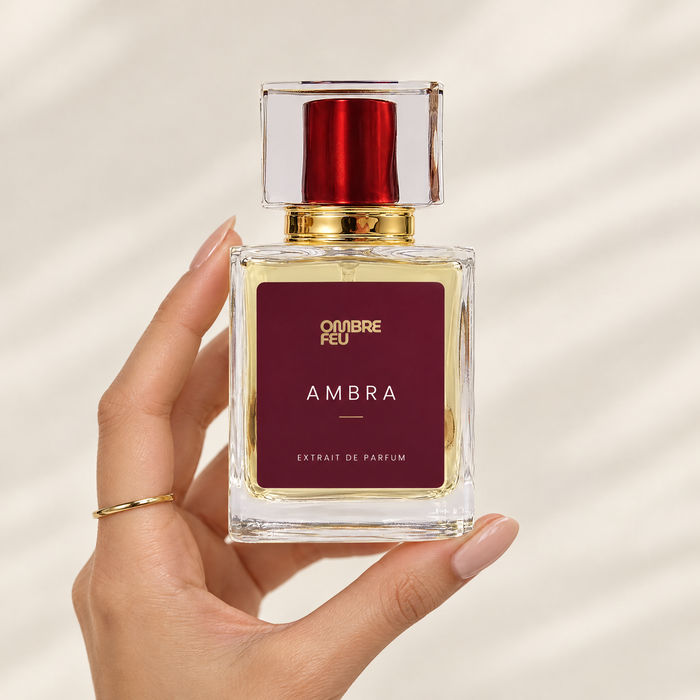
Braise is not one. The fragrance was not built after an original but developed from the ground up – following an idea rather than a template – and bottled in Germany. That comes at a price: €49.90 for 50 ml as an Extrait de Parfum with 30% fragrance oil; the differences from lighter concentrations are explained in Eau de parfum or eau de toilette. In return you get a base of leather, vanilla, tonka bean, tobacco, sandalwood and amber that stays on the skin for 12–18 hours, and a formula that exists nowhere else. How the pyramid unfolds in detail is shown on the page The fragrance. The same goes for GOAT, Ambra and every other fragrance in our collection. All mandatory information is openly available on the page Ingredients & product safety.
Whether that difference is worth it to you is your decision. We just tell you what you’re paying for. The story behind it is in “Why Braise?”.
Conclusion
A dupe is neither a fraud nor an insider tip, but a tool. It is legal as long as it is sold under its own name and meets the EU’s mandatory labelling requirements. It usually convinces in the first few minutes and loses out where a fragrance gets expensive: in the base, in the development, in longevity. If you want to test a direction or need a fragrance for work, it often serves you well. If you are looking for a long-lasting perfume that accompanies you through the day and is modelled on no one else’s, you should look elsewhere.
Frequently asked questions
What is a perfume dupe?
A fragrance deliberately composed to resemble a well-known original, but sold under its own name and its own brand. That is legal as long as neither the name nor the bottle nor the packaging imitates the original. Colloquially it is also called a scent twin.
Is a dupe the same as a counterfeit?
No. A counterfeit pretends to be the original – with its name, logo and packaging. That is a trade mark infringement and a criminal offence. A dupe only copies the olfactory impression and appears under its own name. Fragrance compositions themselves enjoy almost no copyright protection in Germany.
Do dupes really smell like the original?
In the opening often astonishingly similar, over the course of wear rarely. The reason is economic: the expensive raw materials usually sit in the base – sandalwood, iris, high-quality musk molecules. That is exactly where a dupe cuts costs. So the first fifteen minutes often match, the next five hours do not.
Are dupes worse for the skin?
Not as a matter of principle. Every perfume sold in the EU must comply with the Cosmetics Regulation, undergo a safety assessment and declare the fragrance substances subject to labelling – regardless of price. It becomes critical with goods from unknown sources that lack this information.
When is a dupe worth it?
When you like a particular, very expensive fragrance and want to use it up in everyday life without thinking about every spray. Or when you first want to get to know a fragrance direction. It makes less sense if longevity and development matter to you.
How do I recognise a well-made dupe?
By three things: it uses a name of its own instead of a number plus a brand reference, it states a complete INCI list, and it names a responsible person with an address in the EU. If one of these is missing, caution is advisable.


- Eau de Cologne, Eau de Toilette, Eau de Parfum, Extrait de Parfum: the differences
- New: Lune Dorée – our captivating Extrait de Parfum for women
- Neu: Nuit Bédouine – unser fruchtig-holziger Extrait de Parfum für Herren
- Ombre & Feu Merch: Hoodies, T-Shirt, Gilet and Accessories at a Glance
- A Small Gift with Fragrance: Perfume Samples for Secret Santa and St Nicholas' Day
- Perfume for New Year's Eve: Which Scent Lasts All Night?
- Perfume for the Christmas Party: Subtle, Warm and Just Right
