


Women’s perfume with rose and vanilla: why floral amber fragrances work so well
Floral-amber women's fragrances combine flowers such as rose or jasmine with warm base notes such as vanilla and amber, which makes them soft and long-lasting. Which notes are typical and when to wear them.

Rose and vanilla are among the oldest partners in perfumery. One floral and lively, the other warm and soft – together they create fragrances that radiate and envelop at the same time. This direction is called floral amber. Here you’ll find out why it works so well, what it is made of and when to wear it.
Floral amber fragrances combine a floral heart – such as rose, jasmine or orange blossom – with a warm base of vanilla, amber and soft woods. The result feels feminine but not sugary, and lasts a long time on the skin thanks to the heavy base notes.
- Floral amber = floral heart + warm base
- Fruity top notes such as pear or mandarin keep the opening fresh
- Vanilla and amber provide warmth and longevity
- Ideal for evenings, dates and the cooler months
- Apply sparingly: warm base notes carry far
Looking for a warm fragrance for autumn and winter? Rose, vanilla and amber unfold particularly beautifully in the cold season. Everything about warm perfumes for women for the colder months can be found on our page Winter perfume for women.
What does floral amber mean?
Perfumes are divided into fragrance families. “Floral” describes fragrances whose heart is shaped by flowers. “Amber” – formerly often called “oriental” – stands for warm, resinous, slightly sweet notes such as vanilla, amber, tonka bean or benzoin. A floral amber fragrance unites both: it starts bright and floral and becomes warmer and softer over the hours.
How a fragrance is built from top, heart and base notes is explained in Understanding fragrance notes.
Floral amber compared
To place this direction, it helps to look at its neighbours:
| Fragrance direction | Typical notes | Effect |
|---|---|---|
| fresh floral | Neroli, lily of the valley, citrus | bright, light, more for daytime |
| pure floral | Rose, jasmine, peony | romantic, radiant, sometimes classic |
| floral amber | Rose, jasmine, vanilla, amber, woods | warm, soft, feminine, versatile |
| gourmand | Vanilla, caramel, praline | sweet, dessert-like, very present |
Floral amber sits right in the middle: warmer and longer-lasting than a purely floral fragrance, but much less sweet than a gourmand. That is what makes this direction so versatile – and so popular as a gift. It works at the office as well as at dinner, as long as the amount suits the occasion, and it can be worn all year round: rather restrained in spring, with full warmth in autumn and winter.
The typical ingredients
| Phase | Typical notes | Effect |
|---|---|---|
| Top note | Pear, mandarin, bergamot, pink pepper | juicy, bright, lively |
| Heart note | Rose, jasmine, orange blossom, iris | floral, radiant, feminine |
| Base note | Vanilla, amber, cashmere wood, musk, tonka | warm, soft, close to the skin |
Fruit in the opening: pear and mandarin
Fruity top notes are the reason modern floral amber fragrances don’t start off heavy. Pear feels juicy and light, mandarin sunny and round. A hint of pink pepper gives the opening a fine sparkle. These notes fade after a while, but they open the way for the floral heart.
Rose: classic, but not old-fashioned
Rose is considered the queen of perfumery. On its own, it can quickly feel powdery and classic. Combined with fruit and vanilla, it takes on a modern, almost creamy note – the rose then no longer smells like a bouquet, but like warm skin.
Jasmine and orange blossom: radiance at the heart
Jasmine brings fullness and a slightly sensual depth, orange blossom something bright, almost soapy. Together with rose, they form a heart that radiates without being loud. Jasmine also provides the link downwards: its warmth flows smoothly into the amber base.
Vanilla: warmth without kitsch
Vanilla is one of the most popular base notes of all. Used well, it makes a fragrance round and soft without pulling it towards dessert. Woods such as cashmere wood and a touch of musk keep it in balance. You’ll find more about warm raw materials in Vanilla, tonka bean, tobacco.
Amber: the warmth in the base
Amber is not a single raw material but an accord – usually made of resins, vanilla and labdanum. It gives a fragrance depth and radiance and is the reason floral amber fragrances can often still be noticed the next morning.
Cashmere wood and white musk: the soft foundation
Cashmere wood feels warm, dry and velvety – like a soft jumper. White musk makes the fragrance sit close to the skin and feel clean. Both stop vanilla and amber from becoming too sweet and give the base structure.
How a floral amber fragrance develops
The beauty of this fragrance family lies in how it unfolds. Over the day, it tells a little story:
- The first few minutes: Fruit and citrus are in front. The fragrance feels bright, juicy and almost playful.
- After about half an hour: The floral heart opens up. Rose and jasmine take over, and the fragrance becomes rounder and more feminine.
- After a few hours: The base comes forward. Vanilla, amber and woods make the fragrance warm and soft, and it moves closer to the skin.
- In the evening: What remains is a warm, creamy veil – hardly any flowers left, mostly warmth.
How far a fragrance projects and how long it lasts are described by terms such as sillage and longevity. What exactly lies behind them is explained in Sillage, projection, longevity.
When to wear a floral amber fragrance
- In the evening and on special occasions. The warm base unfolds especially in quiet, personal moments.
- In autumn and winter. Cool air slows evaporation, so the warmth of the fragrance feels particularly pleasant.
- On spring evenings. The floral opening goes well with longer days.
- Sparingly at the office. One spray is enough to keep the fragrance close.
Floral amber in winter
The cold season is where this fragrance family truly shines. In the cold, top notes evaporate more slowly, and heavy base notes feel softer and less sweet. Rose and vanilla harmonise with wool, cashmere and velvet, with candlelight and long evenings. If you’re looking for a winter fragrance that warms without feeling heavy, floral amber is almost always the right choice. We’ve gathered more inspiration and suitable notes for the season on the page Winter perfume for women.
How to wear it properly
Spray the fragrance onto warm areas of skin – neck, décolleté, wrists – and don’t rub it in. With an extrait, one or two sprays are enough. If you’d like to wear the fragrance in your hair too, spray once into the air and walk through it. Dry skin holds fragrance less well, so an unscented lotion beforehand helps. Why a fragrance smells different on everyone is explained in Why does perfume smell different on everyone?.
Typical mistakes
- Too much of a good thing. Vanilla and amber carry further than you notice yourself. After a while you can barely smell your fragrance – but others can.
- Only smelling it from the bottle. The first impression is fruity. The real warmth only shows after an hour on the skin.
- Wearing it in great heat. Heat intensifies sweetness. On hot days, it’s better to use just one spray or a fresher fragrance.
- Combining it with heavily scented skincare. Fragranced body lotions can compete with rose and vanilla. Unscented skincare lets the fragrance come across more clearly.
Step by step: testing a floral amber fragrance
- Start with clean skin: Ideally after a shower, without scented cream. That way you smell the fragrance, not your skincare.
- One spray on the wrist: Don’t rub it in, just let it dry.
- Pay attention to the opening: How does the fruit come across? Too sweet, just right, too fleeting?
- Smell it again after an hour: Now the floral heart reveals itself. Do you like the rose, or does it feel too powdery?
- Decide in the evening: Only the base reveals whether vanilla and amber strike the right balance for you. If you still like the fragrance then, you’ve found your candidate.
Don’t test more than two fragrances in one day, one on each wrist. After that, your nose can barely tell fine nuances apart.
What to look for when buying
The concentration: Floral amber fragrances benefit from a high fragrance oil content, because their base can then unfold its full depth. An extrait de parfum usually contains 20–40% fragrance oil, an eau de parfum typically around 15–20%. More on this in Extrait de Parfum explained.
The list of notes: Make sure the heart and base are in balance. If the base contains only sweet notes, the fragrance can quickly become dessert-like. Woods and musk are a good sign of balance.
The ingredients: Floral notes often contain natural fragrance substances that must be listed on the packaging as potential allergens under the EU Cosmetics Regulation. If you have sensitive skin, take a look at the INCI list. How we handle this is described on Ingredients & product safety.
If you’d like to give a floral amber fragrance as a gift, you’ll find helpful tips in Giving perfume to women.
Ambra: our fragrance for her – creamy, sweet and fruity
Ambra goes its own way: instead of rose and jasmine, it relies on fruit and gourmand notes – creamy and sweet rather than classic floral amber. It opens juicily with ripe pear, mandarin and a spark of raspberry. At the heart sit lightly roasted pistachio and pale praline, with a trace of orange blossom. Then a soft base of Bourbon vanilla, sandalwood, ambroxan and skin musk settles on the skin. As an extrait de parfum with 30% fragrance oil, Ambra lasts 9–14 hours. It comes in a square glass bottle with a red cap, 50 ml, bottled in Germany.
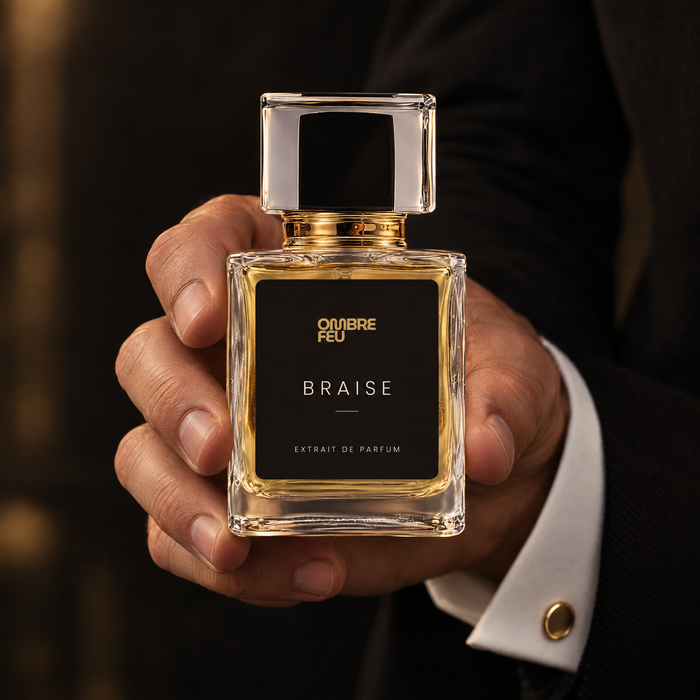
Ambra shares the warm vanilla in its base with Braise – the fragrance pairing for two. More on this in Perfume for couples. You’ll find all fragrances for her under Women’s fragrances.
Conclusion
Floral amber fragrances combine the best of two worlds: the radiance of rose, jasmine and orange blossom and the warmth of vanilla, amber and soft woods. They feel feminine without being sugary, last a long time and are especially well suited to evenings, autumn and winter. Applied sparingly, they are one of the most versatile companions perfumery has to offer.
Frequently asked questions
What does floral-amber mean in perfume?
A floral heart of blossoms such as rose, jasmine or orange blossom meets a warm base of vanilla, amber and soft woods. The fragrance opens bright and grows warmer over time.
Is a vanilla perfume too sweet?
Not necessarily. Combined with flowers, woods and musk, vanilla comes across as round and warm rather than sugary. What matters is the balance of the composition.
When do you wear a floral-amber perfume?
Especially in the evening, on dates and in the cooler months. At the office, one sparing spray is enough.
How long does Ambra #3 last?
As an extrait de parfum with 30% fragrance oil, Ambra lasts 9–14 hours on the skin, depending on skin type and the amount applied.


- Eau de Cologne, Eau de Toilette, Eau de Parfum, Extrait de Parfum: the differences
- Neu: Nuit Bédouine – unser fruchtig-holziger Extrait de Parfum für Herren
- Ombre & Feu Merch: Hoodies, T-Shirt, Gilet and Accessories at a Glance
- Perfume in Hand Luggage: Flying Rules and How to Keep Your Fragrance Safe on the Road
- A Small Gift with Fragrance: Perfume Samples for Secret Santa and St Nicholas' Day
- Christmas Gift for Her: How to Find the Right Perfume
- Christmas Gift for Him: Which Perfume Really Suits Him?
