


Extrait de Parfum, Eau de Toilette & Co.: 21 perfume questions, clearly answered
An Extrait de Parfum usually contains 20–40 % fragrance oil, an Eau de Toilette 5–15 %. This and 20 more perfume questions – from the right dosage to how long 50 ml lasts – each with a short answer, details and sources.

Here you’ll find answers to the 21 questions people ask most often about perfume. Each question has a short answer for a quick read, followed by the details. Where there are figures, we name the source – and where sources contradict each other, we say so openly.
- Extrait de parfum is the highest common fragrance concentration: usually 15–30% fragrance oil, sometimes up to 40%.
- Eau de parfum is around 10–20%, eau de toilette around 5–10%. These values are not fixed by law.
- Applying: on warm areas of skin (neck, décolleté, wrists), no more than three spots, don’t rub it in.
- Not smelling it anymore usually just means your nose has got used to it. The fragrance is still there.
- A perfume has gone bad when it is heavily discoloured, thick or smells sour.
- 50 ml lasts about 8 to 16 months at two sprays a day.
What is extrait de parfum?
Short answer: Extrait de parfum is the highest common concentration level of a fragrance. It usually contains around 15 to 30 percent fragrance oil, sometimes up to 40 percent, dissolved in alcohol. As a result, it lasts longer, feels denser and closer to the skin, and is applied more sparingly than an eau de parfum or eau de toilette.
The French word extrait means “extract”. In shops, the same level is also called Parfum, Pure Parfum, Extrait or Elixir. Every perfume consists of two parts: the fragrance oil – the actual composition made of many fragrance materials – and a carrier, usually alcohol. The name on the bottle gives a rough idea of how much fragrance oil it contains in proportion. An extrait contains the most.
Important: the terms are not legally protected. The German cosmetics industry association IKW (Industrieverband Körperpflege- und Waschmittel) speaks of “approximate figures” that can vary considerably from manufacturer to manufacturer. In detail: Extrait de Parfum: what the highest fragrance concentration delivers.
How much oil is in extrait de parfum?
Short answer: Extrait de parfum typically contains 15 to 30 percent fragrance oil, and some fragrances contain up to 40 percent. For comparison: eau de parfum has about 10 to 20 percent, eau de toilette about 5 to 10 percent and eau de cologne 3 to 5 percent.
| Name | Fragrance oil content (usual range) | Longevity on skin (guide value) |
|---|---|---|
| Extrait de Parfum / Parfum | 15–30%, sometimes up to 40% | very long, often into the evening |
| Eau de Parfum | approx. 10–20% | long |
| Eau de Toilette | approx. 5–10% | a few hours |
| Eau de Cologne | approx. 3–5% | short |
| Eau Fraîche | approx. 1–3% | very short |
The ranges differ from source to source: Wikipedia gives 15–30% for parfum, haut.de 20–40%, the IKW 15–30% or “up to 40 percent”. The reason: there is no legal definition. If a manufacturer states the concentration specifically, that tells you more than any name.
How do you use extrait de parfum?
Short answer: Use extrait de parfum sparingly: one to two sprays for the day, no more than three in the evening. Spray from about 10 to 20 centimetres onto warm areas of skin such as the throat, back of the neck, décolleté or wrists, don’t rub it in and give the fragrance 20 to 30 minutes.
- After showering, apply to dry skin, ideally after an unscented lotion.
- Keep your distance: about 10 to 20 centimetres, so the fragrance spreads finely.
- Choose one or two spots: for example the throat and one wrist.
- Don’t rub it in – let it dry instead.
- Don’t reapply straight away: an extrait lasts a long time; if you can barely smell it after an hour, that’s usually down to your nose.
Which is better, eau de parfum or parfum?
Short answer: Neither eau de parfum nor parfum is better in principle – the name only describes the concentration, not the quality. Parfum (extrait) usually lasts longer, feels denser and needs fewer sprays. Eau de parfum often projects more strongly at first and is usually cheaper per bottle.
| Eau de Parfum | Parfum / Extrait | |
|---|---|---|
| Fragrance oil | approx. 10–20% | approx. 15–30%, sometimes up to 40% |
| Longevity | long | very long |
| Effect | noticeable scent cloud | denser, rather close to the skin |
| Sprays | 2–3 | 1–2 |
| Ideal for | all-rounder | long days, evenings, the cold season |
On top of that, perfumers often adjust the composition slightly for each concentration. The same perfume can therefore smell different as an eau de parfum and as an extrait – it’s best to test both versions.
Why is it called eau de toilette?
Short answer: It is called eau de toilette because in French, “toilette” originally meant the morning grooming routine – washing, doing your hair, getting dressed. The word comes from toile (cloth). “Eau de toilette” therefore roughly means “water for grooming”. The meaning “lavatory” only appeared in German in the 19th century.
Early scented waters were light, alcohol-rich blends used to freshen up – at a time when bathing in water was considered unhealthy. A famous relative is eau de cologne: the Italian perfumer Johann Maria Farina created his scented water in Cologne in 1709 and first used the name “Eau de Cologne” in a letter from 1742.
When should you wear eau de toilette?
Short answer: Wear eau de toilette as your everyday fragrance: during the day, at the office, in warm weather, after sport. Because it contains less fragrance oil, it is lighter and fades faster. For evenings and special occasions, the German industry association IKW recommends eau de parfum or parfum instead.
- Summer and heat: warmth intensifies fragrance – a light EdT doesn’t become heavy.
- Office: subtle, without a scent cloud in the meeting room.
- After sport: as a quick burst of freshness.
- For topping up: you can reapply an EdT at lunchtime.
You’ll find the direct comparison with eau de parfum in Eau de parfum or eau de toilette?.
Which is better today, parfum or eau de toilette?
Short answer: For most people who want to wear a fragrance all day, parfum is the better choice today: it lasts considerably longer and doesn’t need reapplying. Eau de toilette is better for heat, sport and anyone who wants to apply a light fragrance several times a day.
The market is clearly moving towards higher concentrations. According to the market research firm Circana, sales of parfum (extrait) in the US rose by 43 percent in 2024 and sales of eau de parfum by 14 percent. Many brands now launch stronger “Intense”, “Elixir” or “Parfum” versions of their classics. The reason: if you spend a lot on a fragrance, you expect it to last the day.
How many perfumes should you own?
Short answer: There is no fixed number of perfumes you should own. A proven rule of thumb is a small fragrance wardrobe of three to five scents: one for the day, one for the evening, one for summer and one for winter. If you want to make one fragrance your signature, one is enough.
A 2017 Statista survey found that around a fifth of the women surveyed in Germany use four to six fragrances in parallel. More fragrances also mean that each individual bottle empties more slowly – so pay attention to good storage. Tips for one single favourite fragrance: Finding your signature scent.
Where should a woman spray perfume?
Short answer: A woman should spray perfume on warm areas of skin with good blood flow: behind the ears, on the neck, the décolleté, the inside of the wrists and the crook of the elbow. The backs of the knees also work for a subtle, rising scent. The IKW recommends no more than three spots.
- Neck and behind the ears: classic, easy to notice when greeting someone.
- Décolleté: body heat carries the fragrance upwards – ideal for the evening.
- Wrists: you can smell the fragrance well yourself.
- Crook of the elbow and backs of the knees: warm, protected, subtle – good in summer.
- Hair: better one spray on your hairbrush, because alcohol can dry out hair.
All the details: How to apply perfume as a woman.
Where does perfume smell the strongest?
Short answer: Perfume smells strongest on the throat, the décolleté and the back of the neck. The skin there is particularly warm, and movement spreads the fragrance through the air. On the wrists, it is mainly you who smells the fragrance; for others it is less present there.
Warmth makes fragrance materials evaporate faster – which is why a perfume smells more intense on warm skin than on cold skin. Textiles such as a scarf or collar often hold fragrance for a long time too.
Should you spray perfume on your clothes?
Short answer: You can spray perfume on your clothes, but with care. On fabric, fragrance often lasts longer than on skin. The IKW names clothing as an alternative and then recommends a distance of about 30 centimetres. On silk and light, delicate fabrics, however, fragrance oils can leave stains.
- Advantage: longer longevity, the fragrance hardly changes.
- Disadvantage: possible stains; on fabric, the fragrance doesn’t develop the way it does on warm skin.
- Best: a scarf, collar or jacket lining made of robust, darker fabric – and most of it on your skin.
Should you rub perfume in or not?
Short answer: No, you shouldn’t rub perfume in after spraying it. Rubbing creates heat, and the light top notes in particular evaporate faster. The industry association IKW expressly advises against it. Better: spray it on and let it dry briefly.
There is no scientific study on rubbing perfume in – but experts agree unanimously on the recommendation. If you want to scent both wrists, spray each one separately instead of rubbing them together.
How often should you spray perfume?
Short answer: How often you should spray perfume depends on the concentration: three to four sprays of eau de toilette, two to three of eau de parfum, one to two of extrait de parfum. Only reapply when the fragrance has actually faded – not because you can no longer smell it yourself.
| Concentration | Sprays in the morning | Reapplying |
|---|---|---|
| Eau de Cologne | 4–6 | several times a day |
| Eau de Toilette | 3–4 | often after a few hours |
| Eau de Parfum | 2–3 | occasionally |
| Extrait de Parfum | 1–2 | rarely |
The figures are a guide, not a standard. At the office and in the heat, rather fewer; in the evening and in winter, rather more.
Why can’t I smell perfume on myself?
Short answer: The most common reasons you can’t smell perfume on yourself are dry skin, on which fragrance evaporates quickly, a concentration that is too light, your nose getting used to it – or a so-called specific anosmia: for genetic reasons, some people can barely smell certain musk compounds. Infections can also temporarily weaken the sense of smell.
- Dry skin: apply an unscented lotion first.
- Too light: switch to eau de parfum or extrait.
- Musk anosmia: studies in Chemical Senses (2024) and PLOS Genetics show that, depending on their receptor genes, people perceive certain musk compounds much more weakly or not at all – usually individual ones, not all of them. Test fragrances with other base notes.
- Smell disorder: if your sense of smell is noticeably worse over a longer period, have it checked by a doctor.
More on this: Why can’t I smell my perfume anymore?
When does perfume stop smelling?
Short answer: For you, perfume often stops smelling after just 20 to 60 minutes – because your nose gets used to the constant smell (olfactory adaptation). For others, perfume usually smells much longer: eau de toilette for a few hours, an extrait de parfum often into the evening.
The adaptation is temporary. The specialist literature on fragrance testing describes that a few minutes in odour-neutral air are usually enough for sensitivity to return. Test: five minutes in the fresh air, then smell directly at your wrist. If you still smell nothing and the person next to you doesn’t notice anything either, the fragrance really has faded.
What perfume makes you smell like you just showered?
Short answer: Perfumes with aldehydes, white musk, citrus, neroli, lavender or lily of the valley make you smell like you just showered – fragrance materials we know from soap and laundry detergent. Frequently recommended examples include Maison Margiela Replica Lazy Sunday Morning, Clean Shower Fresh and The Body Shop White Musk.
The musk compound Galaxolide, for example, smells clean and soft and has been used in fabric softeners and detergents since the late 1960s – which is why we associate it with fresh laundry. More examples and the fragrance notes in detail: Perfume that smells like a fresh shower.
How do you always smell like you just showered?
Short answer: To always smell like you just showered, you need a clean base and the right application: spray perfume straight after showering onto moisturised skin, use a neutral or matching shower gel and deodorant, don’t rub it in, wear fresh clothes and choose a fragrance with clean notes such as musk, aldehydes or citrus.
- Apply straight after showering.
- Use an unscented lotion as a base – fragrance lasts longer on moisturised skin.
- Shower gel and deodorant neutral or matching the fragrance.
- Don’t rub it in.
- Freshly washed clothes; scent your hair via the hairbrush.
- Better a higher concentration than constant reapplying.
What is the number 1 women’s perfume?
Short answer: At the big retailers in Germany, the number 1 women’s perfume is currently Yves Saint Laurent Libre. According to the Flaconi Beauty Report 2025, Libre was the best-selling women’s fragrance in the German-speaking region, and it also ranks first in the German Douglas list “Top 10 women’s perfumes” (as of October 2026).
| Source (Germany) | Number 1 | Basis |
|---|---|---|
| Flaconi Beauty Report 2025 | YSL Libre (Eau de Parfum) | sales in 2024, followed by La vie est belle and Prada Paradoxe |
| Douglas Top 10 women’s perfumes | YSL Libre | retailer list, followed by Prada Paradoxe and Burberry Goddess |
| Galeria Top 10 women’s perfumes 2026 | Dior J'adore | retailer list |
| Parfumo (community) | Mon Guerlain | user ratings, not sales |
A ranking, however, says nothing about whether a fragrance suits you. The only way to find out is to try it on your own skin.
How long can you use a perfume?
Short answer: According to the German information site haut.de, a perfume keeps for more than three years, often considerably longer when stored somewhere cool, dark and dry. You can use it as long as its colour and smell are unchanged. If it smells sour or has become heavily discoloured and thick, you should stop using it.
Legally, cosmetics with a shelf life of more than 30 months do not need to state a minimum durability date (EU Cosmetics Regulation 1223/2009, Article 19). For spray bottles that are not opened, the open jar symbol is often omitted as well, according to the German Federal Office of Consumer Protection and Food Safety (BVL). Don’t store perfume in the bathroom or on the windowsill. More: Can perfume expire?
How can you tell if perfume has gone bad?
Short answer: You can tell a perfume has gone bad by three signs: it has become noticeably darker or cloudy, it is thicker than before, and it smells sour, vinegary, musty or like plastic. Often the fresh top notes are missing as well, and the fragrance starts “flat”.
- Check the colour: hold the bottle up to the light. Strong discolouration or cloudiness is a warning sign.
- Check the consistency: according to haut.de, you should part with a perfume that has become heavily discoloured and thicker.
- Check the smell: spray it onto a test strip and pay attention to the first few seconds. Sour, metallic or musty means: it has gone bad.
But: some fragrances with vanilla or resins darken quite normally without going off. If in doubt, compare with a fresh sample. A perfume that has gone bad can irritate the skin – in that case, better throw it away.
How long does a 50 ml bottle of perfume last?
Short answer: A 50 ml bottle of perfume gives roughly 500 to 1,000 sprays. At two sprays a day, it lasts about 8 to 16 months; at three sprays, about 5.5 to 11 months. So if you dose an extrait sparingly, 50 ml will usually last you about a year.
| Sprays per day | How long 50 ml lasts (estimate) |
|---|---|
| 1 | about 1.4 to 2.7 years |
| 2 (typical for extrait) | about 8 to 16 months |
| 3 | about 5.5 to 11 months |
| 5 (typical for eau de toilette) | about 3.3 to 6.5 months |
Basis of the calculation: depending on the atomiser, one spray releases about 0.05 to 0.1 ml; one specialist retailer gives around 0.07 ml. There is no standard for this. If you wear several fragrances in rotation, your bottle will last correspondingly longer.
Conclusion
Almost all perfume questions come down to three things: the concentration (how much fragrance oil is in the bottle), the application (where, how much, no rubbing) and the storage (cool, dark, closed). Get these three right and you’ll get more out of every fragrance.
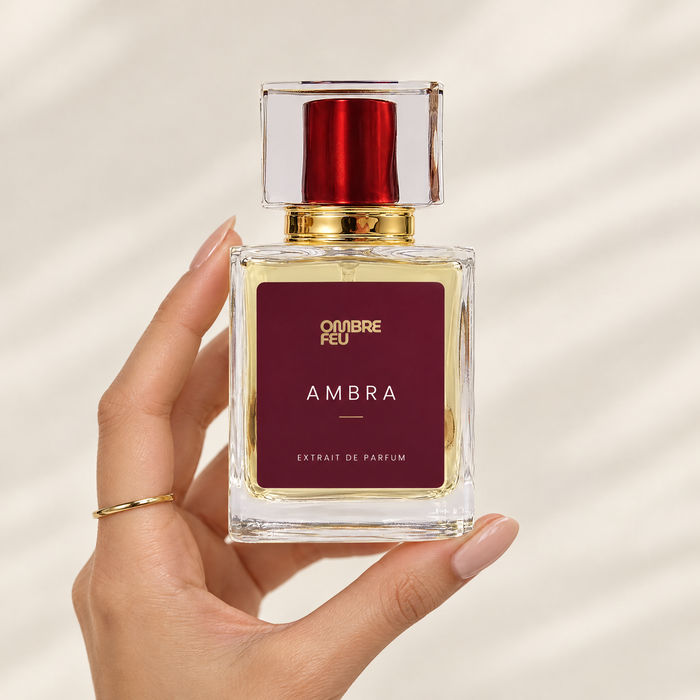
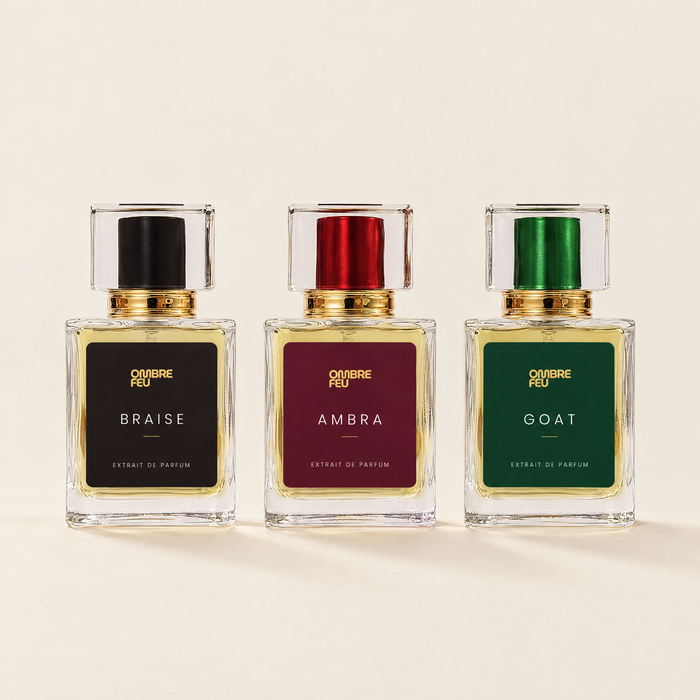
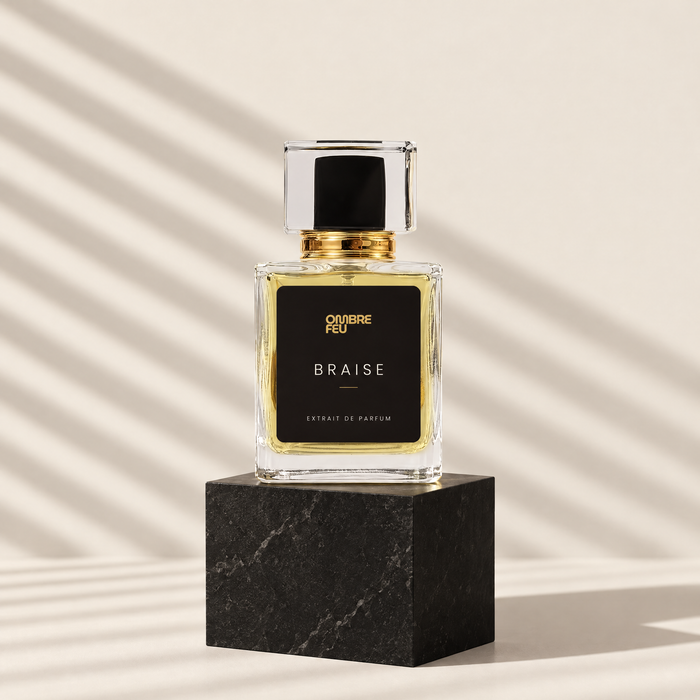
Our fragrances Braise, GOAT and Ambra are extraits de parfum, made in Germany. If you’d like to test them first, order the sample set – we credit the sample price towards your later bottle purchase via a voucher code.
Sources and further reading
- IKW – Beauty tip: how to apply perfume properly (German)
- IKW – Brochure on fragrances and fragrance materials (PDF, German)
- haut.de – Facts about fragrance and perfume (German)
- haut.de – Shelf life of fragrances (German)
- Wikipedia (de) – Perfume
- Wikipedia (de) – Toilette (etymology)
- Wikipedia (de) – Eau de Cologne
- BVL (German Federal Office of Consumer Protection and Food Safety) – Shelf-life dates for cosmetic products
- Circana (2025) – U.S. Beauty Industry Sales
- Flaconi Beauty Report 2025 – Perfume (Germany)
- Douglas Germany – Top 10 women’s perfumes (retrieved 01.10.2026)
- Galeria Germany – Top 10 women’s perfumes
- Parfumo – Top women’s fragrances
- Statista (2017) – Number of fragrances used simultaneously (Germany)
- Emter et al., Chemical Senses (2024) – Musk receptors
- Li et al., PLOS Genetics – Specific anosmia to musk
- Spektrum Lexikon der Biologie – Olfactory adaptation (German)
- Perfumer & Flavorist (2016) – Olfactory Fatigue
- Wikipedia (en) – Galaxolide
- parfumproben-versand.de – How many sprays are 2, 5 or 10 ml? (German)
- Eau de Cologne, Eau de Toilette, Eau de Parfum, Extrait de Parfum: the differences
- New: Lune Dorée – our captivating Extrait de Parfum for women
- Neu: Nuit Bédouine – unser fruchtig-holziger Extrait de Parfum für Herren
- Ombre & Feu Merch: Hoodies, T-Shirt, Gilet and Accessories at a Glance
- A Small Gift with Fragrance: Perfume Samples for Secret Santa and St Nicholas' Day
- Perfume for New Year's Eve: Which Scent Lasts All Night?
- Perfume for the Christmas Party: Subtle, Warm and Just Right
